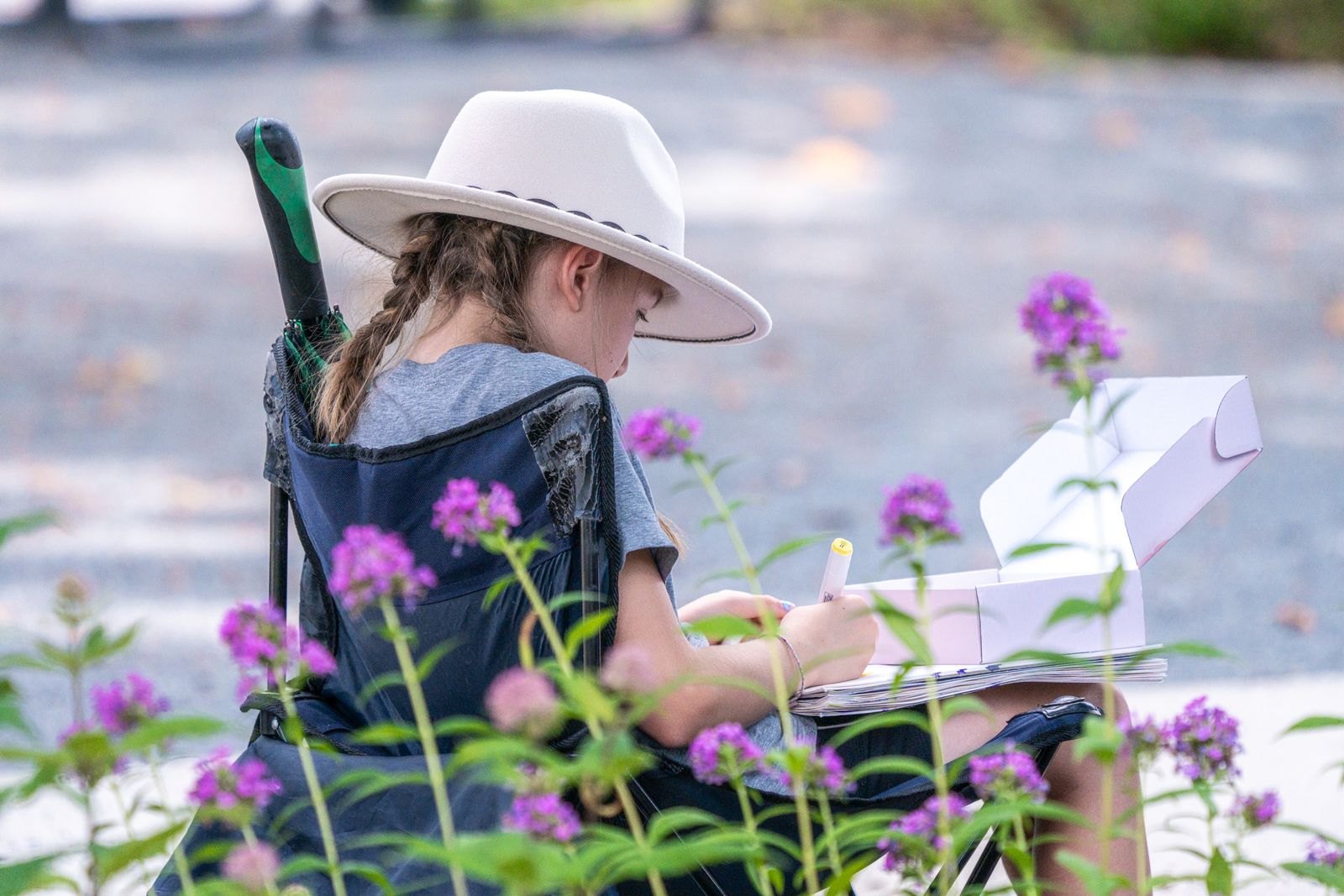
A backyard observation session can be ten unhurried minutes near a familiar patch of plants. It does not need binoculars, a kit or a promise that something exciting will appear. Choose an area an adult knows is appropriate for the children and the day's conditions.
Check the space first for relevant hazards, including tools, chemicals, unsafe plants or nearby water. Stay with children as their age and the setting require. If you do not have a yard, a suitable public garden or other permitted outdoor space can provide the same kind of activity.
Pick one place to look
A tree trunk, a planter or a patch of grass is enough. Ask what looks different when you stay still for a moment. Children may notice movement, a shadow or a shape that adults overlook because they are searching for a particular animal.
Leave wildlife and its habitat undisturbed. Watch from an appropriate distance, do not handle unfamiliar creatures and follow local guidance. There is no need to lift everything, collect insects or touch plants to make the session meaningful.
Use questions that leave room for uncertainty
Instead of asking for a species name, try asking what the child sees moving or where a shadow begins. If you do not know what something is, say so. You can consult a reliable guide later if the interest continues.
A drawing or a short description can record the moment. Some children may prefer to talk while an adult writes; others may want no notebook at all. Avoid turning the session into a requirement to produce evidence of learning.
Stop while the place is still interesting
Leave when attention fades or conditions change. A return another day may reveal a different pattern of light, weather or activity. It may also look much the same, which is a valid observation.
Clean hands as appropriate after outdoor time and put any supplies away. Keep the ending simple enough that another session is easy to begin. The useful part is the habit of looking closely at a familiar place, not the number of discoveries you can report afterward.