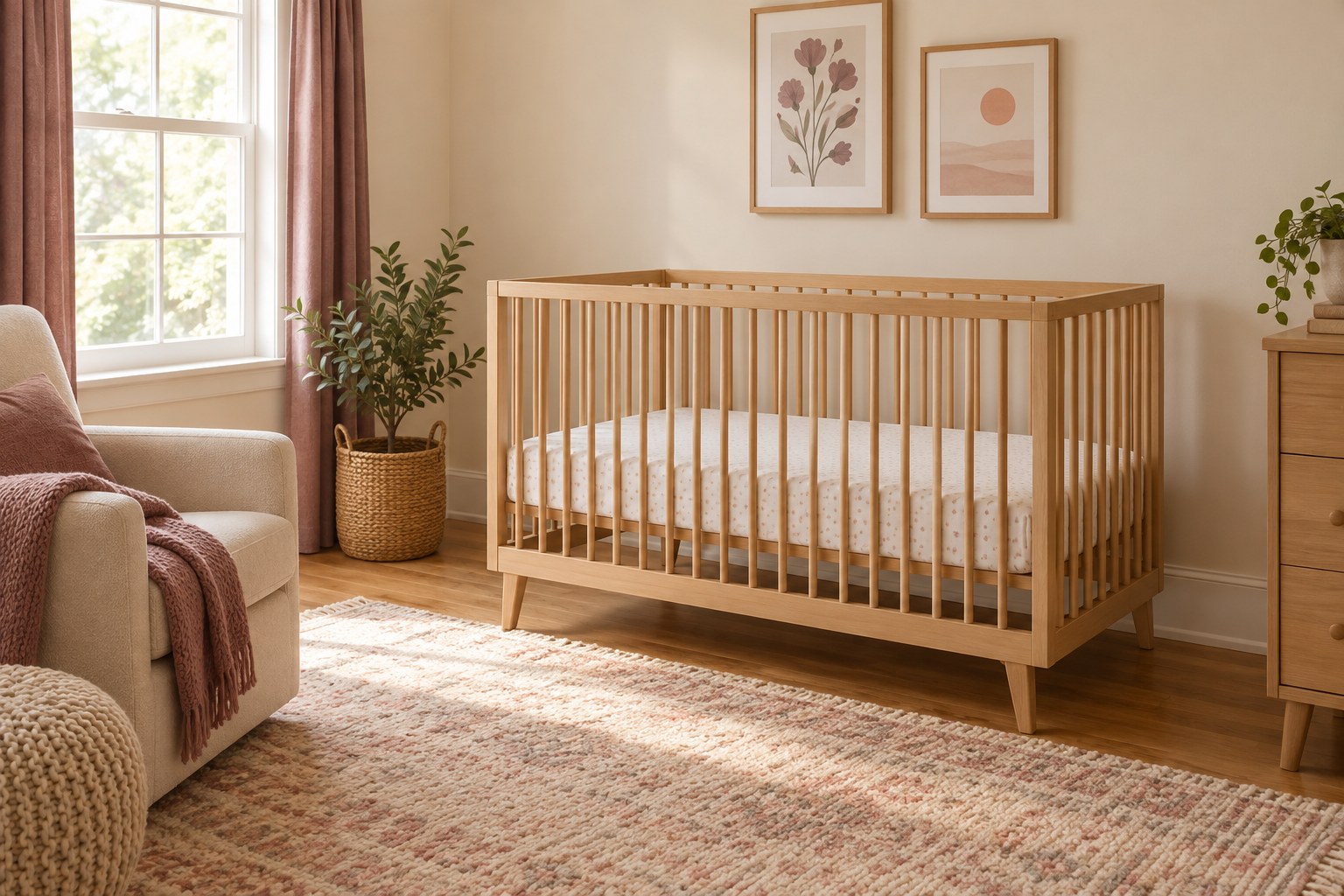
A nursery photograph often makes the crib look like the center of a decorated display. For daily use, the more useful starting point is a clear sleep space and an easy route for the adult. Put decoration and storage around that requirement, rather than adding soft objects to make the crib look finished.
Use an appropriate infant sleep product assembled according to its instructions, with a firm, flat, level surface and a properly fitted sheet. Place the baby on their back for sleep. Keep pillows, blankets, toys, bumpers and other loose items out of the sleep area. A bare crib is ready for use; it is not missing a finishing touch.
Check what can be reached from the crib
Position the sleep space away from window-covering cords, electrical cords and items the child could pull in. Think about future reaching and standing, not only the newborn's present movements. Keep shelves, decorations and monitoring equipment arranged so they cannot fall into or create a hazard around the sleep space.
Anchor furniture and televisions as appropriate using the manufacturer's instructions and suitable hardware. A dresser that feels heavy can still present a tip-over risk. Avoid placing attractive objects where a child may climb to reach them, and review the room again as mobility changes.
Keep supplies outside the crib in a place the adult can reach. A chair for feeding or sitting should not become an alternate infant sleep surface. If the baby falls asleep in equipment not intended for routine sleep, follow current guidance to move them to the appropriate sleep space as soon as possible.
Leave room for ordinary movement
Walk from the door to the sleep area and changing location with the room arranged as it will be used. Remove obstacles and keep lighting controls accessible. Storage that blocks a drawer or narrows the route may look compact but create frustration during care.
The baby may initially sleep in a separate sleep space in the caregivers' room, consistent with room-sharing guidance. The nursery does not have to contain every function immediately. Use it for the tasks that suit the household while keeping the actual sleep arrangement safe wherever it is located.
Add color through walls, adult-use furnishings or other appropriately placed details. The room can feel warm without filling the baby's sleeping area. Its most important feature is that the safe arrangement remains simple to use every time.