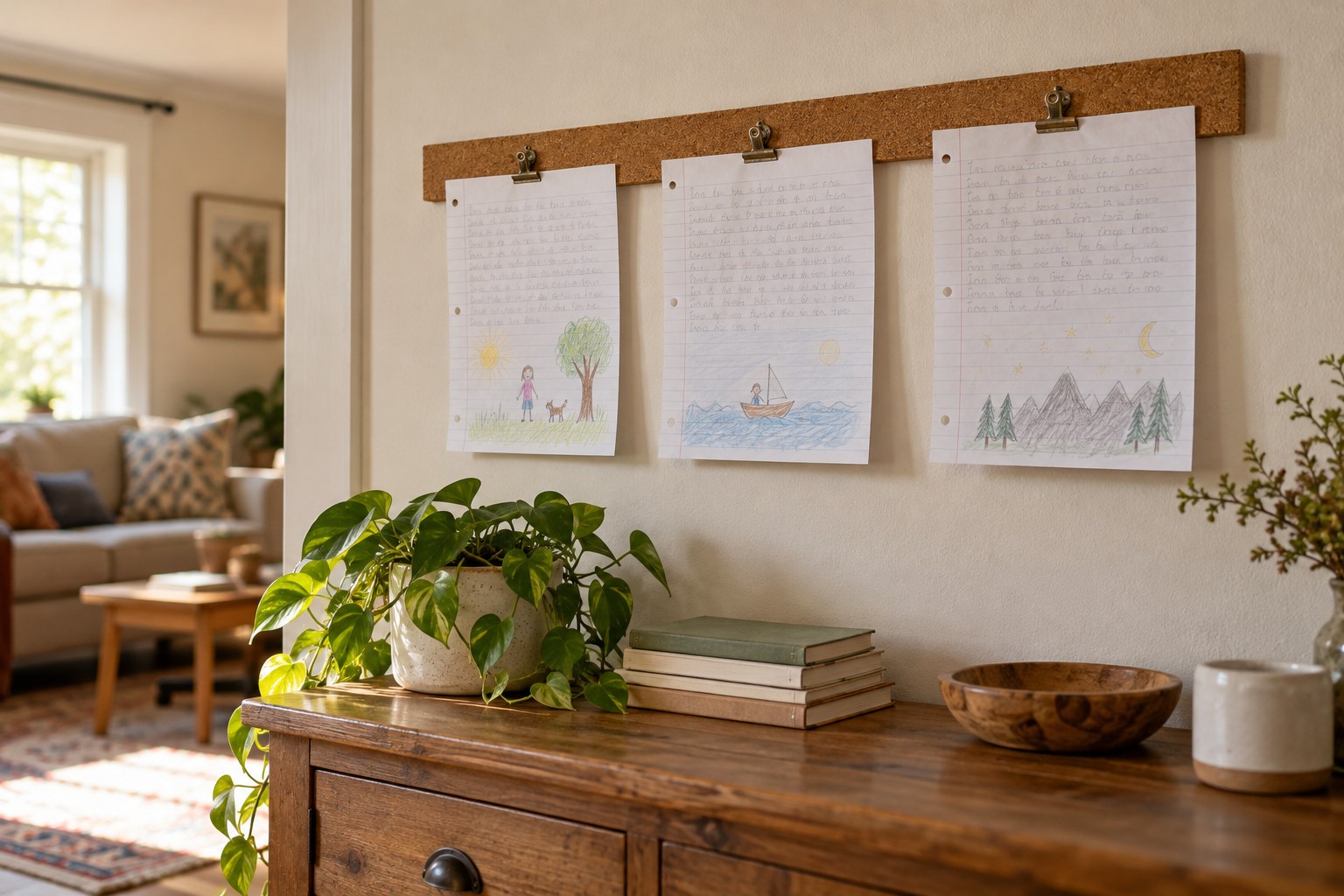
Children's writing can deserve a place in the home without every page becoming a framed keepsake. A small display gives a story, note or poem room to be noticed. Begin by asking the child whether the piece is something they want to share.
Some writing is private, unfinished or intended for one person. Do not assume that a proud adult may display it automatically. Offer choices: a family noticeboard, a folder, a copy for a relative or no display at all.
Make the area easy to change
A suitable frame that an adult opens, a safe display pocket or another secure arrangement can hold a few pages. Choose a method appropriate to the children in the home, avoiding accessible sharp pins, loose magnets or cords that create hazards.
Keep the display small enough that a new piece can be seen. If every wall is covered, individual work may disappear into the background. One story at a time can invite more attention than a permanent collection of everything written during the year.
Preserve the child's voice
Ask before correcting spelling or rewriting a sentence for display. A draft can show the child's own decisions and progress without being edited into adult language. If they request help, distinguish between suggestions and changes they actually want to make.
You might add a title or date if the child agrees. Avoid publicly displaying identifying information such as a school schedule, address or full personal details. A photograph shared outside the household needs a separate decision about privacy.
Give old pieces a destination
When the display changes, ask what should happen to the previous work. A small folder can keep selected pieces, while a digital copy may suit others. Not every page needs both a physical and digital archive.
Let the child revisit the collection without using it to compare them with siblings or earlier versions of themselves. The display is a place for their writing to have an audience, not a scoreboard.
If they stop wanting work displayed, respect that change. Interest in sharing can vary with the piece and the stage of childhood. The useful system is one that makes room for a chosen page and can just as easily leave the space empty.