An entryway has a simple job: receive the things people bring home and release them again when they leave. Shoes, bags, coats and keys become a pile when their destinations are unclear or inconvenient. Watch a few ordinary arrivals before deciding what storage the space needs.
Notice where people naturally stop and what they put down first. A bag dropped beside the door may need a nearby hook or shelf, not a reminder to walk through the house. Keep the entrance, exit route and door movement clear. Storage that blocks the way has made the entry less useful, however tidy it looks.
Assign space by use
Each person can have a small defined place for current items. The spaces do not need to be identical if the belongings differ. A child's school bag and an adult's work equipment may require different arrangements. Keep hooks and fixtures appropriate to their load and install them according to the product and wall requirements.
Limit the area to what comes and goes regularly. Out-of-season coats and rarely worn shoes can live elsewhere if space is tight. A large collection near the door makes the item needed today harder to find.
Plan for wet and dirty things
Give damp coats, umbrellas and shoes somewhere suitable to dry without soaking other belongings or creating a slippery route. Follow care instructions and avoid sealing wet items into a closed bin. A tray can help contain dirt, but it still needs emptying and cleaning.
Keep keys, medication, small batteries and other unsuitable items inaccessible to young children. An adult's convenient drop zone may contain hazards even when the furniture itself is child-sized. Separate safe child-accessible belongings from adult essentials.
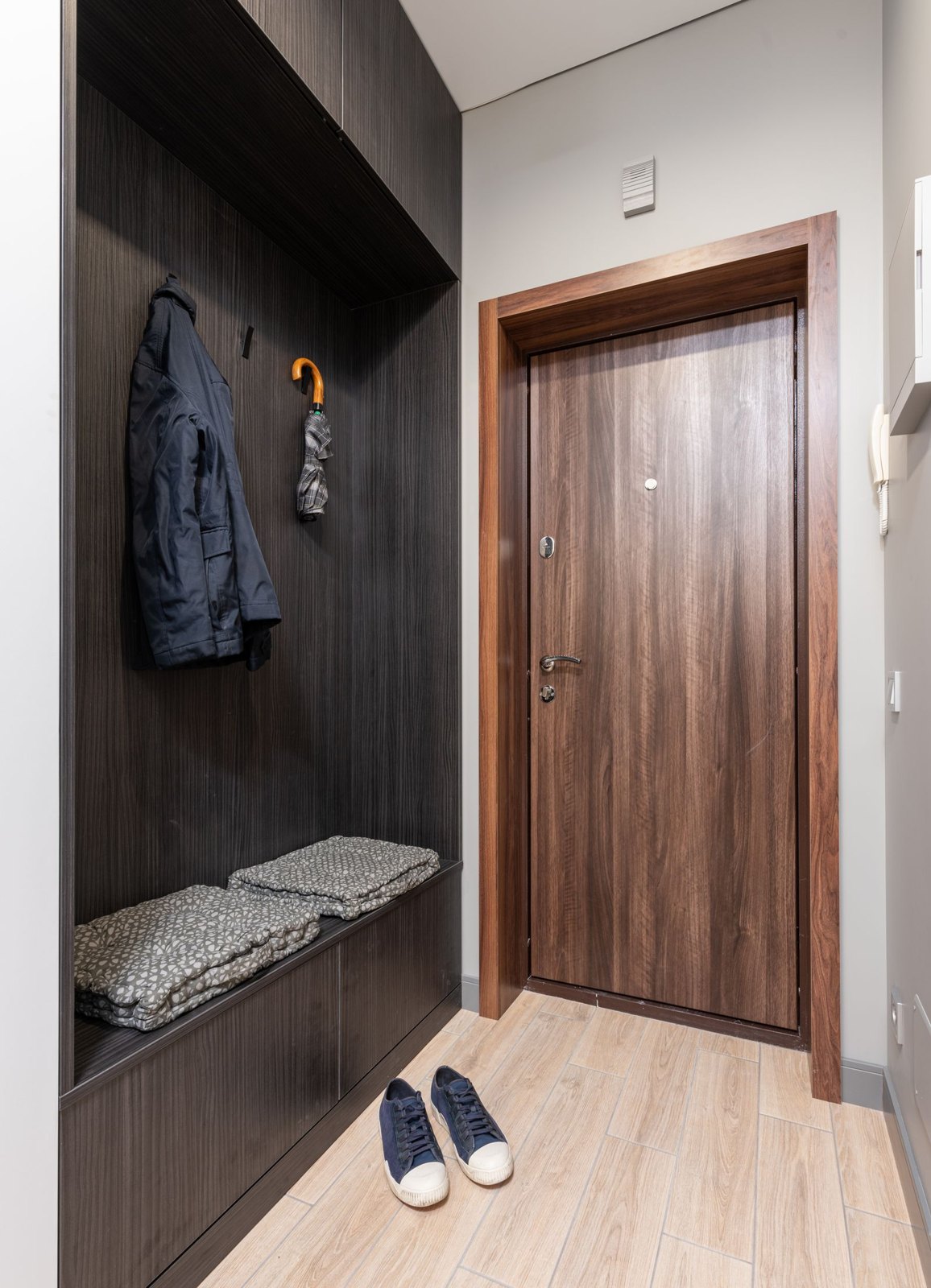
For example, a narrow hallway might use one current pair of shoes per person and a few properly installed hooks, with spare equipment stored elsewhere. It does not need a large bench if that removes the space needed to pass comfortably.
Review the area when seasons or activities change. Replace the swimming bag with the winter gear rather than adding every new activity to the same hook. A landing place stays useful when it holds the present routine, not every item that has ever passed through the door.