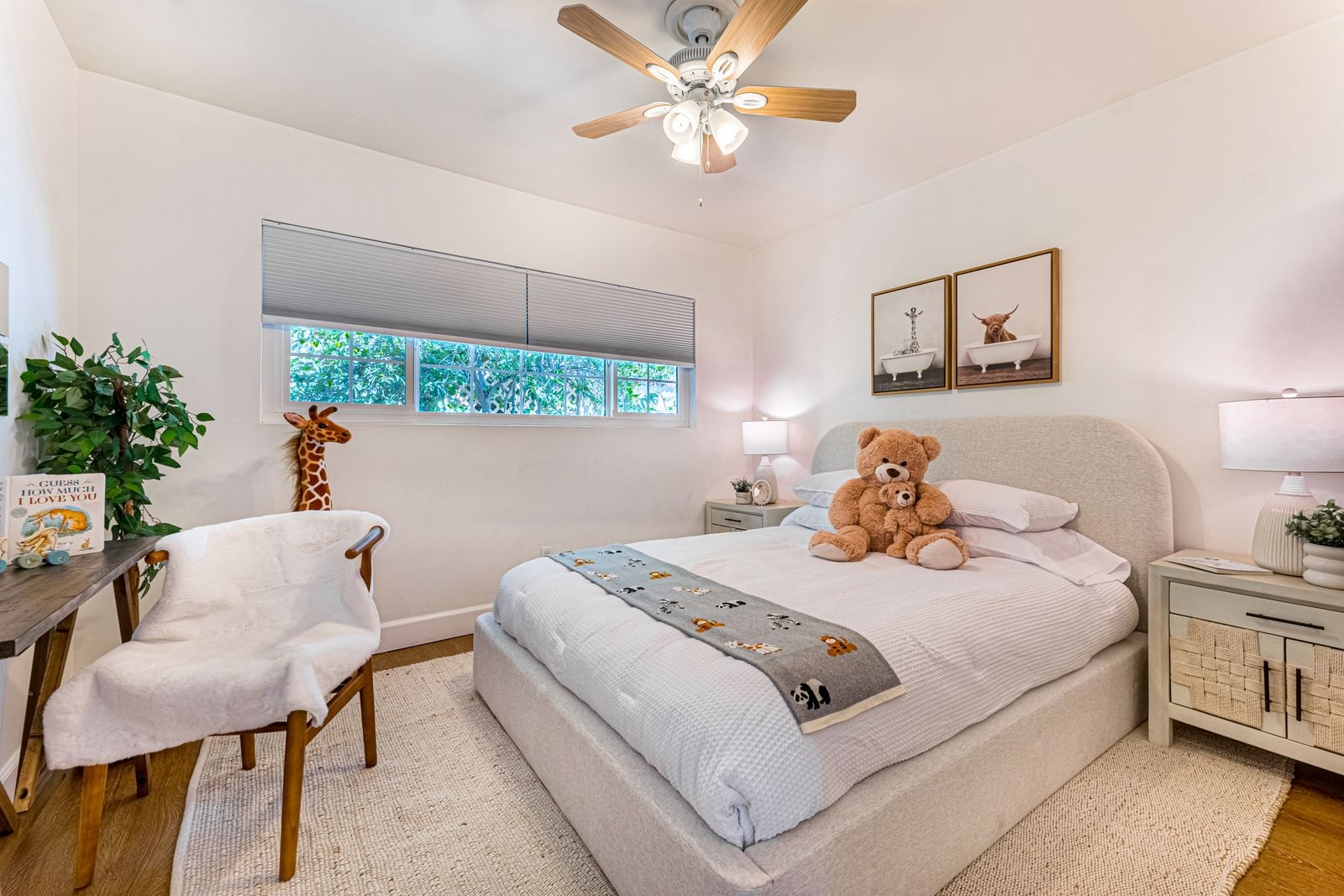
Children sharing a bedroom may have different ideas about color, storage and what should stay out. Invite their views before making changes, but explain which decisions are open. The adult still needs to manage safety, cost and the practical use of the room.
Ask each child what currently works and what is difficult. A request for a new bed may really be a request for somewhere to keep a book, or for a sibling not to move personal belongings. Listen to the underlying need before choosing a product.
Offer influence at a useful scale
Children might choose bedding appropriate to their age, arrange a personal shelf or select between two suitable storage options. Infant sleep spaces must remain clear and follow current safe-sleep guidance; decoration choices cannot override those requirements. Furniture and equipment must suit the child's age and be installed and used correctly.
Use a simple room sketch or move paper shapes around if that helps older children imagine the layout. Measure the actual space and preserve access to doors, drawers and walking routes. A plan that looks fair on paper may block one child's storage when both beds are in use.
Give each child some protected personal space, even if it is small. Shared storage can hold shared materials, while personal items need clear permission rules. Avoid assuming the older child should surrender every preference because they are more able to explain or tolerate it.
Try reversible changes first
Before buying furniture, test a different arrangement of appropriate existing storage or change which shelf belongs to whom. Observe whether the change solves the problem. An attractive room is not necessarily an easier room to share.
Explain decisions that cannot accommodate both requests. You can acknowledge disappointment without reopening the entire budget. Where possible, let children take turns choosing smaller details over time rather than making one large vote determine everything.
Return to the arrangement after living with it. The children may identify a new issue, such as a reading light disturbing the other bed. A shared bedroom is an ongoing agreement about living together, not a design reveal that everyone must be permanently happy with.