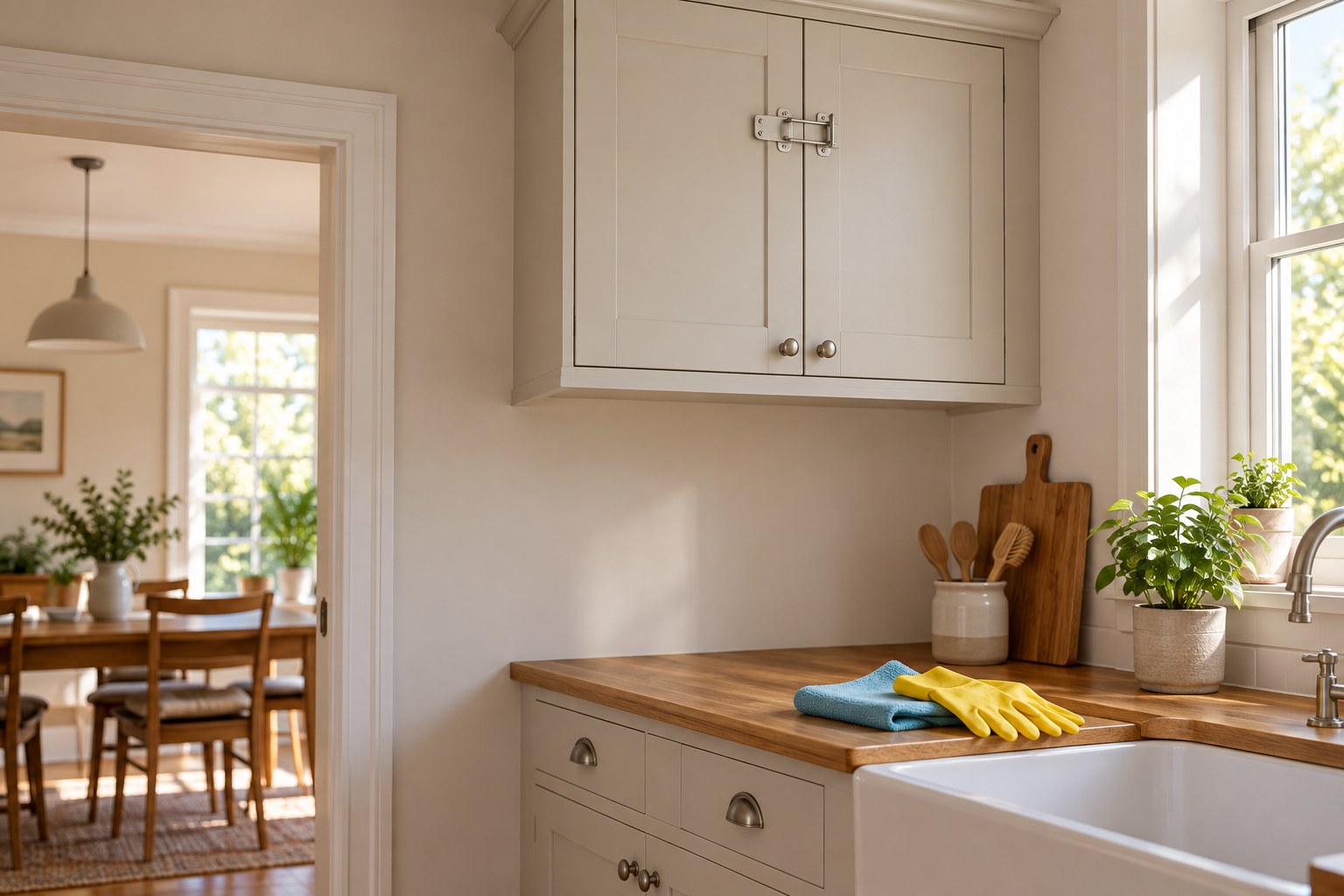
Cleaning products do not belong in the same accessible storage as towels, cups or other ordinary family supplies. Their packaging and location need to reflect what they contain. A clear separation makes the household easier to use and reduces the chance that someone reaches for the wrong thing.
Keep products in their original labeled containers and follow storage instructions. Do not transfer cleaners or laundry packets into food jars, drink bottles or decorative dispensers. The original label carries identification and use information that a handwritten replacement may omit.
Choose secure storage
Use appropriate locks or safety latches and keep hazardous products out of children's sight and reach. Height alone should not be treated as the entire safety plan. Check that the storage remains secure after use and that visiting adults know where products belong.
Laundry packets need particular care: keep them sealed in their original packaging, locked away and inaccessible to children. A transparent jar on an open shelf is not an appropriate organizing solution. Keep other hazardous items, including medicines and sharp tools, in their own suitable secure arrangements rather than mixing everything into one general supply basket.
Imagine a low cupboard currently holding spare towels beside bathroom cleaner. Move the hazardous products to appropriate secure storage first, then decide whether the towels can remain accessible. Adding two matching bins inside the same unlocked cupboard has not created the necessary separation. The change needs to affect access, not just appearance.
Check the lock or latch after installation and during ordinary use. Make sure the adults who need it can operate it and return the cupboard to its secured state. A device that is routinely left open because it is inconvenient is not functioning as intended. Follow its instructions and replace or repair damaged components appropriately.
Separate storage from the task
Bring out only what you need for the cleaning job and return it promptly when finished. Do not leave an open bottle or a prepared bucket where a child can access it while you answer the door. Follow label directions, including ventilation and protective precautions, and never mix products unless the instructions specifically direct it.
Keep cloths and ordinary replacement supplies in a separate place if they can safely be accessible. This allows a family member to collect a clean towel without reaching past chemicals. The division should be obvious to everyone using the cupboard.
Review what remains
Check containers for damage or leaks and use the appropriate disposal guidance for unwanted products. Do not pour an unknown mixture into another bottle or combine nearly empty products to save space. If a label is unreadable, seek appropriate guidance rather than guessing its contents.
For a small home, the answer may be fewer products chosen for actual tasks, not more open shelving. Keep the safety requirements intact while reducing duplicates. A secure, plainly labeled cupboard is doing its job even if it does not resemble a decorative pantry.
Include temporary supplies brought by visitors or cleaners in the same plan. A safe permanent cupboard does not help if another bag of products is left on the floor. Consistent return and storage habits matter as much as the initial arrangement.