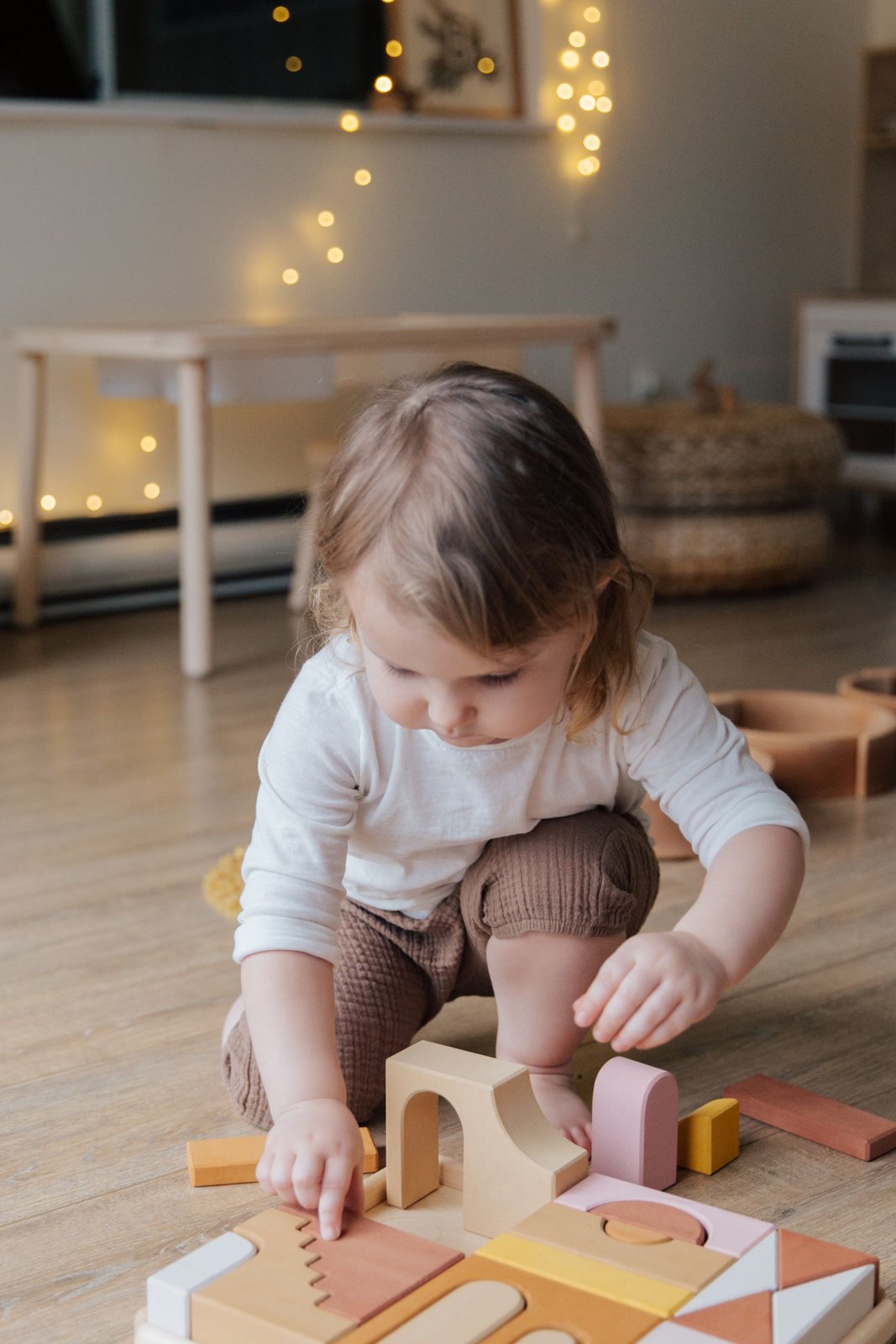
Toy rotation is useful only if it reduces work. If it requires photographing every shelf, planning themes and hiding toys on a strict calendar, it can become another household project. Start with the simpler question: can the child see and reach the toys they use without emptying a crowded container?
Choose a manageable selection of age-appropriate toys in good condition. Include different kinds of play where they fit the child, such as building, pretend play or looking at books. There is no required number of categories and no need to remove a favorite simply because its turn has ended.
Store the remainder as a small reserve
Put unused toys in a place children cannot access unsafely. Keep small parts belonging to older children separate from items available to a baby or toddler. Check age labels and the condition of pieces before returning anything to play, especially after a toy has been stored or passed between siblings.
Swap a few items when interest changes or the play area becomes difficult to reset. You can leave well-used toys in place and introduce one forgotten item. The goal is access, not novelty on demand. A child may ignore a newly returned toy, and you do not need to persuade them to use it.
Observe how the space works. If pieces from several sets are repeatedly mixed in a way the child enjoys, storing them separately may not be necessary. If a large container makes every cleanup harder, smaller open categories may help. Choose arrangements you can maintain after an ordinary busy afternoon.
Invite an older toddler to help put away a few pieces with specific directions, while offering the assistance they need. Do not make the continued availability of all toys depend on a young child completing an adult-sized cleanup alone.
Review the reserve occasionally for outgrown, damaged or no-longer-wanted items. Keeping everything indefinitely can turn rotation into concealed accumulation. Pass on suitable items responsibly and follow recall or disposal guidance for unsafe products. A useful rotation leaves both the child and the adult with less searching and fewer piles, without requiring a new playroom design each week.