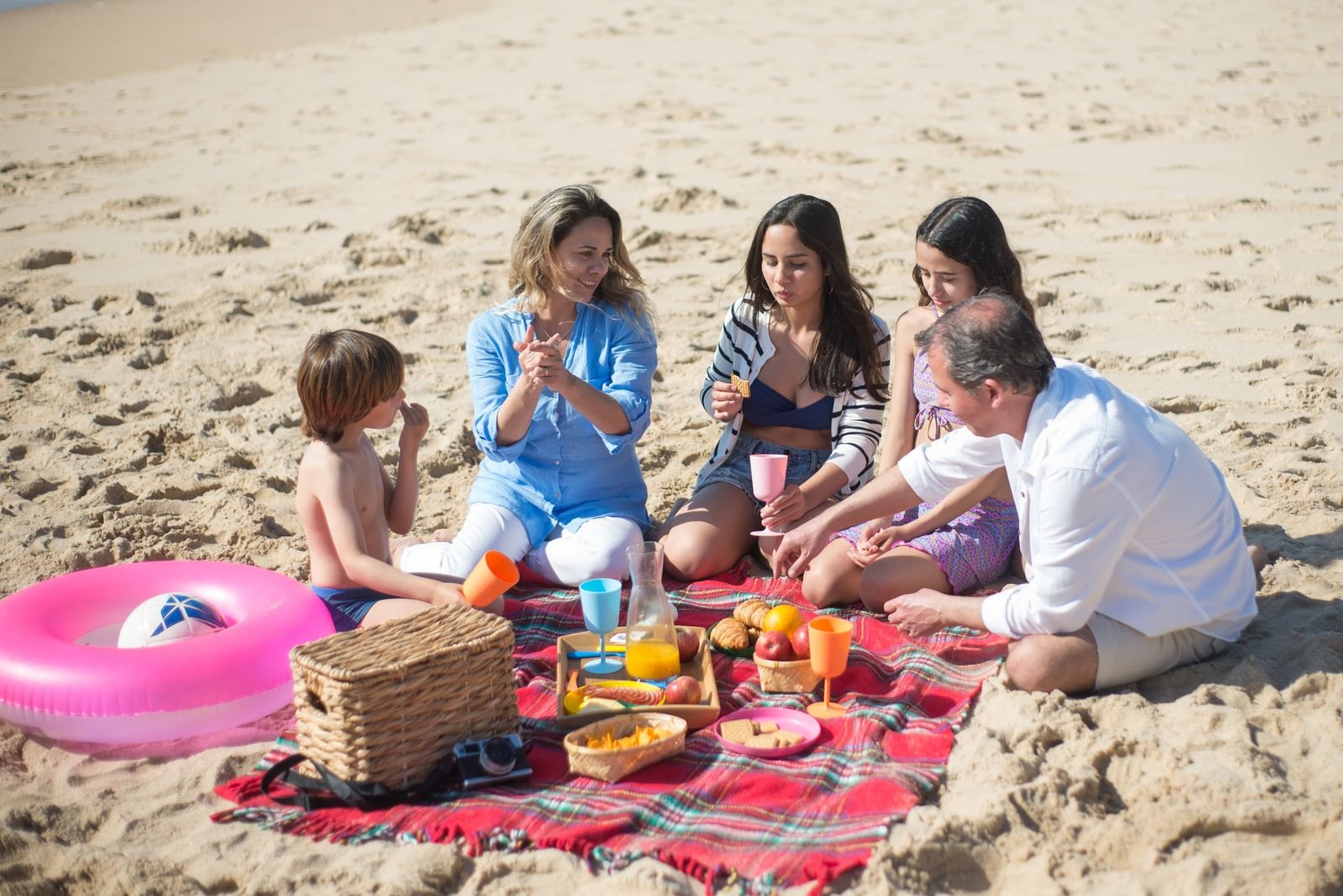
Packing a picnic begins with where you will eat. A table beside the car allows a different setup from a grassy spot reached after a walk. Check whether you can carry everything comfortably, whether there are facilities for washing hands and what you will do with waste afterward.
Choose food that the family can manage in that setting. Complicated assembly may be awkward without a table, and a large shared dish can require more utensils than expected. Consider children's ages, allergies and appropriate food preparation rather than assuming every picnic staple suits every child.
Keep cold food cold throughout the journey
Perishable food needs reliable cold storage, not simply a bag that feels cool when you leave. Pack it chilled in a suitable insulated cooler with enough ice or cold packs, and use a thermometer to check that it remains at 40°F or below. Keep the cooler shaded where possible and closed between uses.
USDA guidance says perishable food should not remain above safe refrigeration temperatures for more than two hours, or one hour when the outdoor temperature is above 90°F. Count the time across preparation, travel and serving when temperature control is lost; returning food to the cooler does not erase earlier time. Discard food when its safety is uncertain rather than judging only by smell.
If maintaining a cold supply is impractical, choose appropriate foods that do not require refrigeration before opening, and follow their labels afterward. The easiest menu is one you can transport safely without a complicated setup at the destination.
Pack in the order you will use things
Hand-cleaning supplies, a surface covering if needed and the first food should not be buried beneath everything else. Keep raw foods separate from ready-to-eat items if your outing includes cooking, and plan proper cooking and temperature checks rather than relying on appearance.
For an ordinary picnic, bringing ready-to-eat food from home can reduce the work on arrival. Keep serving portions manageable and return perishables to controlled cold storage promptly. A separate drinks container can reduce repeated opening of the food cooler when that is practical to carry.
Leave the place ready for the next family
Bring a way to contain waste and used utensils, following the location's disposal rules. Do not rely on a bin being available or empty. Keep food away from wildlife and follow any local storage guidance.
Before leaving, check the area for small belongings as well as litter. The final few minutes are easier when cleanup supplies were packed deliberately, rather than improvised from the only bag still holding clean clothes.