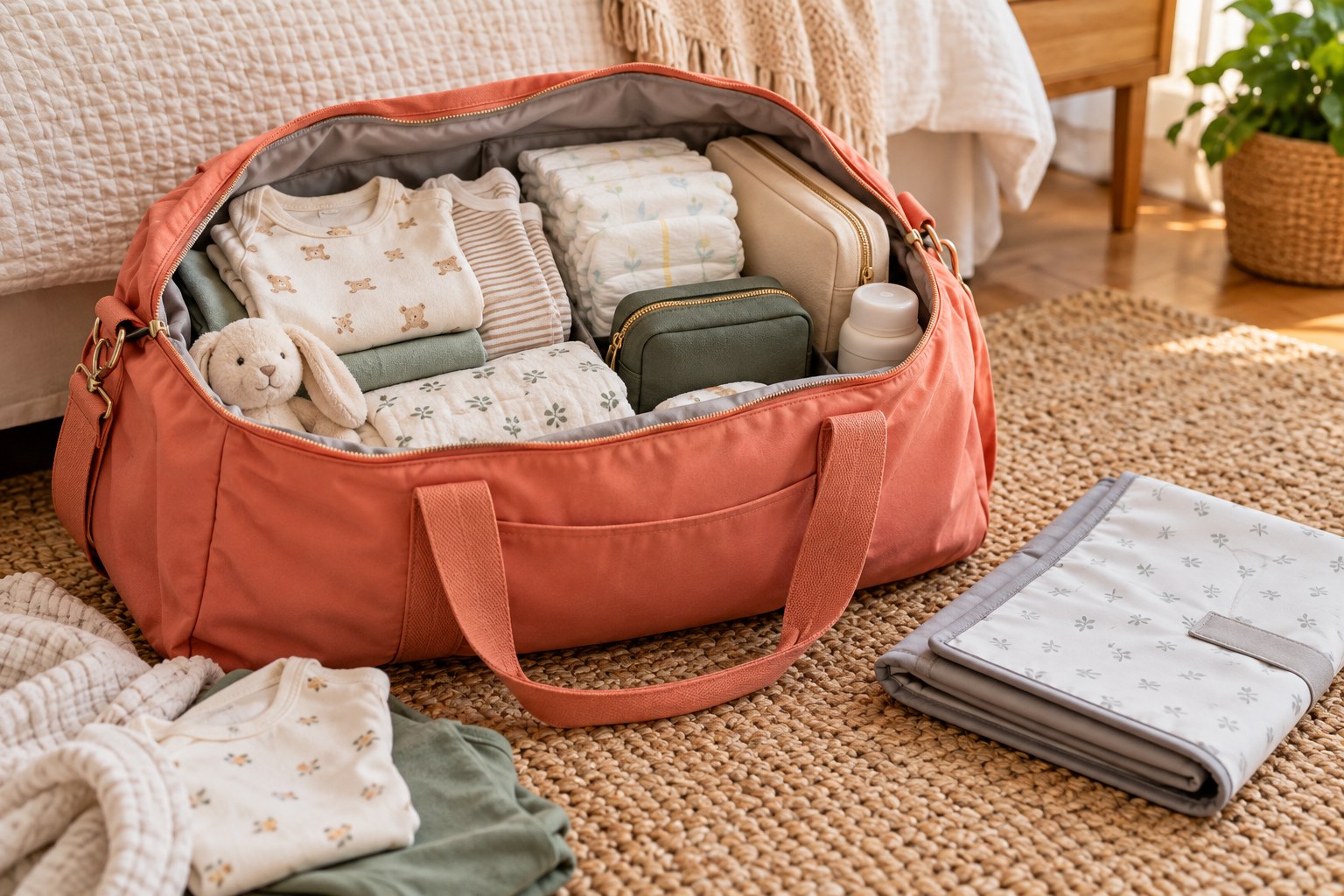
The first overnight visit with a baby often produces a very long packing list. Begin with the arrangements that cannot be improvised comfortably at bedtime: a suitable sleep space, feeding needs, changing supplies and a way to contact the people you may need.
Ask the host exactly what sleep product is available. A family description such as we have a baby bed is not enough to identify its model, condition or suitability. If you bring your own approved travel sleep product, assemble it according to its instructions and use only the specified mattress or pad and properly fitted sheet. Do not add a spare mattress to make it softer.
For every sleep, place the baby on their back in a firm, flat, level sleep space intended for infants, keeping loose bedding, pillows and toys out. Room sharing in a separate sleep space is different from sharing an adult bed. Explain the arrangement to anyone who may put the baby down; a familiar relative may remember older practices that do not match current guidance.
Pack around the evening and morning
Use your ordinary care routine as a guide. Include current-size clothing, spare sleepwear, diapers and the feeding supplies your baby uses. Plan any required safe storage and preparation rather than assuming the host has suitable equipment. Keep essential items together so you do not have to search several bags during the first change.
Check the room before settling in. Look for cords near the sleep space, accessible small objects, unstable furniture and items belonging to other household members. Keep adult bags, medicines and care products out of the child's reach. A guest room may not normally be arranged for a baby.
Discuss the visit's pace. A short meal and time together may be enough; you do not need several outings to make the overnight stay worthwhile. Tell the host when you may need a quiet break, without promising that the baby's timing will follow the usual schedule exactly.
Agree on help rather than assuming it
Tell the host which tasks you would welcome help with and which instructions must be followed. A relative may offer to handle the first morning while you rest; make sure they know the current care arrangement and have the supplies and information needed. Being related does not automatically mean being familiar with this baby’s routine or equipment.
Also decide where bags and equipment will go so the host’s normal routes remain usable. A travel crib should not be squeezed into an unsuitable position simply to preserve the room layout. If a safe workable arrangement cannot be made, change the visit rather than planning to improvise after everyone is tired.
Make the departure easier too
Bring a separate place for laundry and keep the product manuals or saved instructions available. Before leaving, check drawers, outlets and the area around the sleep product for small essentials. Clean and pack equipment as directed rather than folding it with used bedding or damp items inside.
Afterward, note what you actually needed and what the host could reliably provide next time. The first visit is useful information for the next one, not a test of whether you can reproduce home perfectly in another house.