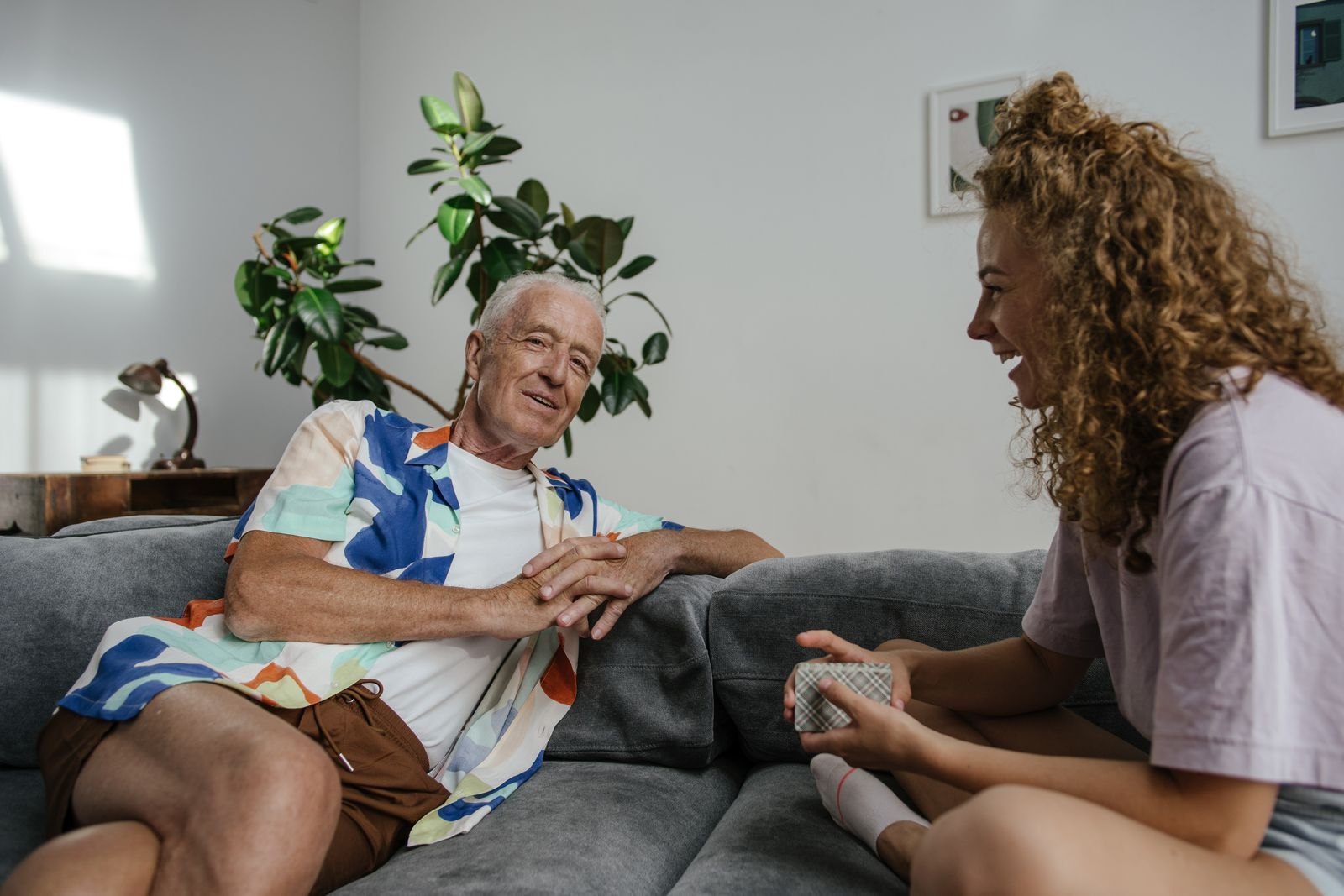
Family stories often appear during ordinary conversation: a meal reminds someone of a relative, or an old photograph prompts a small detail nobody knew. Recording these moments does not require a formal interview or a complete family history. Begin with one story and ask whether the person would like it saved.
Explain what you plan to do with the recording or notes and who will be able to access them. Consent to talk is not automatically consent to public posting. Respect a request to keep something private or not record it at all, and make it possible to change that decision later where practical.
Ask about a concrete detail
A question such as what was the kitchen like can be easier than tell me about your childhood. An object, recipe or photograph provides a starting point without requiring a polished account. Let the speaker follow the memory rather than steering every answer toward your planned outline.
Avoid correcting minor details during the story simply because another relative remembers them differently. You can note uncertainty afterward. Memory is not a complete official record, and two accounts can be kept without pretending they are identical.
Keep the recording manageable
Use a device you understand and make a short test so the sound is audible. A quiet place helps, but an elaborate setup can make the conversation feel more formal than intended. Stop when the person is tired or wants to change the subject.
Save the file with a useful name and date. Add who is speaking, the broad subject and any agreed limits on sharing. Keep a suitable backup and check that the file opens. A recording with a mysterious filename on one old phone may be difficult to find later.
If writing notes instead, distinguish direct quotations from your summary and avoid filling gaps with invented detail. Share the notes with the person if they want to review them. Some stories may be better preserved as a recipe card, a caption or a short voice message than a long recording.
Return to the process only if it remains welcome. The value lies in preserving someone's voice and perspective, not completing a questionnaire. A few freely shared memories can be more meaningful than an exhaustive account gathered under pressure.