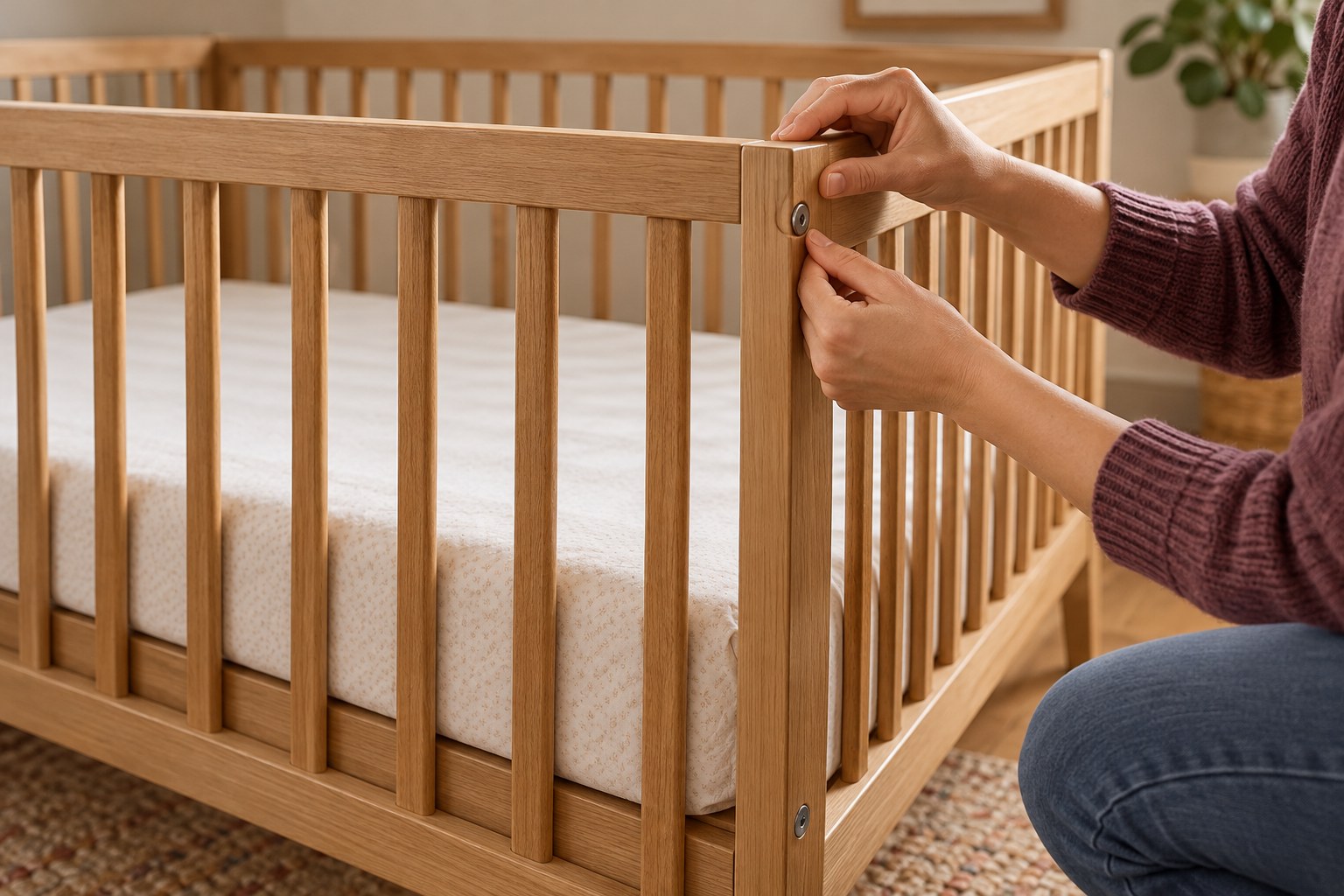
A used crib should be assessed as a safety product, not simply as a piece of furniture. A fresh finish, a familiar seller or a reassuring family story cannot establish that it meets current requirements. Do the checks before bringing it into use.
Find the manufacturer, model and manufacturing information. Obtain the correct instructions and check the exact product for recalls. If identifying labels are missing or the model cannot be established, do not guess from a similar photograph. You need enough information to verify the crib and its required components.
Traditional drop-side cribs are not an acceptable option. CPSC's reseller guidance states that they cannot be made compliant by immobilizing the side with replacement hardware. Avoid antiques and improvised modifications as well. A crib that was used years ago without a known incident is not thereby suitable for another baby today.
Inspect every part against the manual
Check for missing, damaged, cracked, loose or altered components, including the mattress support and hardware. Do not substitute hardware-store fasteners or handmade parts. Use only manufacturer-approved parts for the exact product, and do not use the crib while a safety issue remains unresolved.
Ask about its history, including disassembly, repairs and storage. Damage can occur during moves, and a bag of spare screws is not proof that the original hardware is complete. If you cannot assemble it correctly from the available instructions and parts, the low purchase price does not solve the problem.
Confirm the appropriate mattress size and type for the crib, with the snug fit and support specified by the manufacturer. Do not fill a gap with blankets or add padding to compensate for a mismatch. The sleep surface must remain firm, flat and level, with a properly fitted sheet and no loose bedding, bumpers or toys.
Do not let collection create commitment
Ask for identifying photographs and the manual before traveling to inspect a crib. If the seller cannot provide the information, resolve that first rather than hoping it will become clear once the frame is in your car. A product can be clean, expensive and still impossible to verify.
At inspection, compare the parts with the manual in good light. Do not let a rushed collection or the seller’s assurance that everyone uses it this way replace the checks. You are allowed to decline after seeing the item. Paying for transport or spending time arranging the visit does not make an uncertain crib more suitable.
Consider the cost of uncertainty
A used crib can stop being economical if approved parts, a suitable mattress or reliable information cannot be obtained. Compare a complete verified arrangement with the complete alternative, rather than comparing only the wooden frame's price.
Follow the product's height, weight and developmental limits and mattress-position instructions as the child grows. Keep the manual and identifying information so future checks are possible. After assembly or a move, inspect the setup again before use.
If the crib is recalled, follow the stated remedy. Do not resell or give away an unsafe item without resolving the applicable issue, and follow disposal instructions where required. When the product's identity, condition or compliance cannot be established, choose another suitable sleep product. A familiar history is welcome information, but it is not a replacement for these checks.