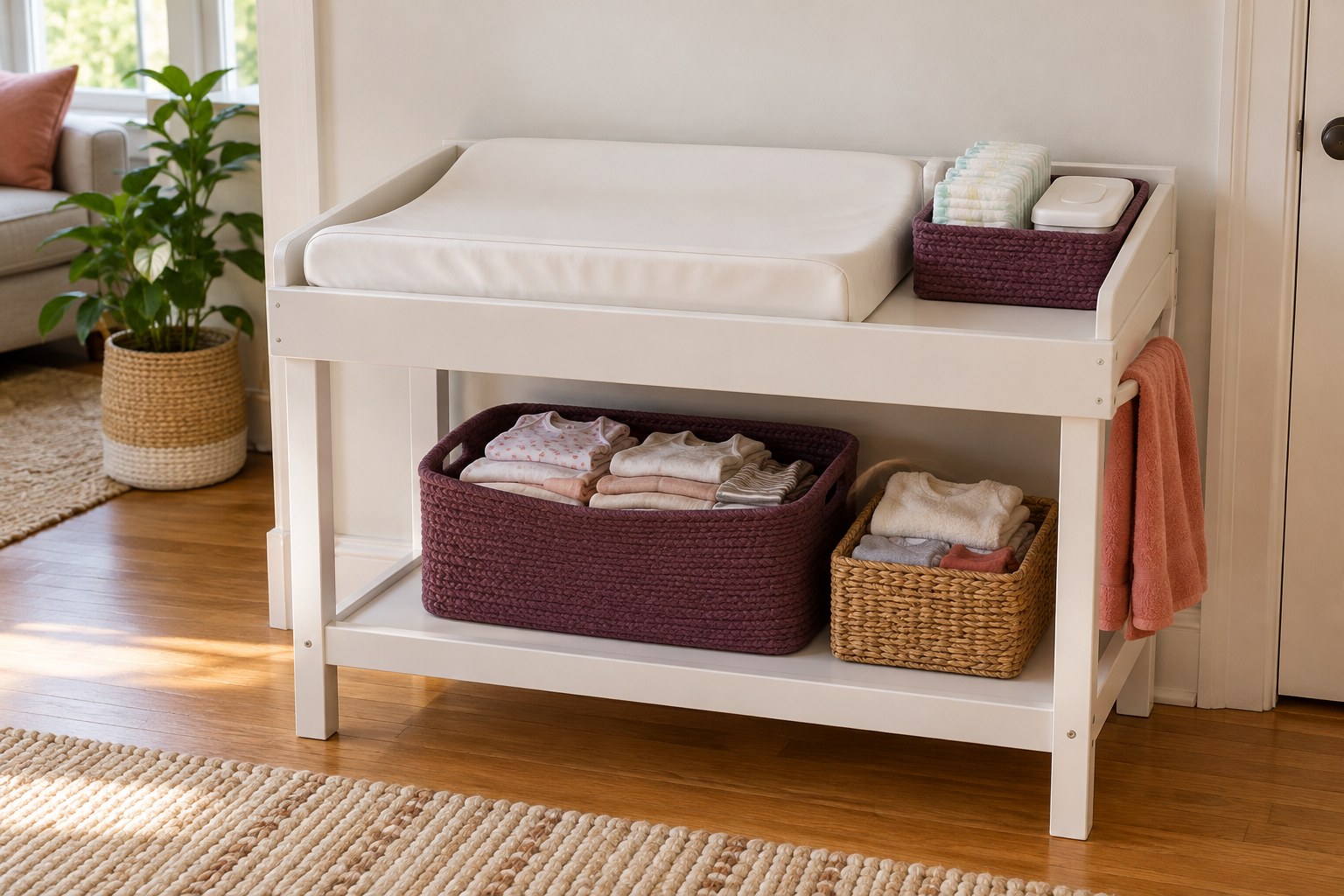
A changing station does not need to occupy a whole room. It needs a suitable place for the change, supplies the adult can reach, and a way to put everything back without making the next change harder. In a small home, the most useful setup is usually the one that stays ready during an ordinary busy day.
Choose the changing location before buying organizers. If you use an elevated changing product, follow its instructions for assembly, attachment, use and limits. A dresser and a loose pad are not automatically a safe combination simply because their dimensions seem to match. Keep one hand on your baby throughout an elevated change, use the provided restraint as directed, and never leave the baby there alone. A strap does not replace your hand or attention.
Arrange supplies around the adult
Put a small working supply of diapers, wipes and clean clothing within your reach before beginning. Keep creams and other care products beyond the child's reach, with their lids closed when not in use. Store refill packs elsewhere rather than crowding the changing surface with every diaper you own.
Try the arrangement without the baby present. Can you open the drawer, take out a diaper and reach the clean clothing while standing in the position you will use? If you must turn away or step across the room, move the supplies. Do not rely on remembering to stretch a little farther during a hurried change.
If something is missing once a change has begun, take the baby with you or place them in their appropriate safe space before fetching it. The convenience of a station should never depend on leaving a child on an elevated surface for a moment.
Give used items a separate route
Place the diaper disposal and laundry containers where the adult can use them without mixing dirty items into the clean supply. Keep bags, cords and cleaning products inaccessible to children. Choose storage you can clean and follow product directions for cleaning the changing surface; wash your hands after the change.
A compact basket can hold the daily supplies, but it is only storage. It is not a place for the baby. Likewise, the changing surface is not a sleep space. When the change is finished, return the baby to an appropriate supervised activity or safe sleep space as needed.
Refill the small supply at a predictable moment, perhaps when putting away laundry. Leave room for the setup to change as the child grows and becomes more mobile. You may need to move containers, stop using a product at its stated limit or choose another suitable changing arrangement. A useful station serves the child you have now, rather than preserving the layout from the day it was first assembled.