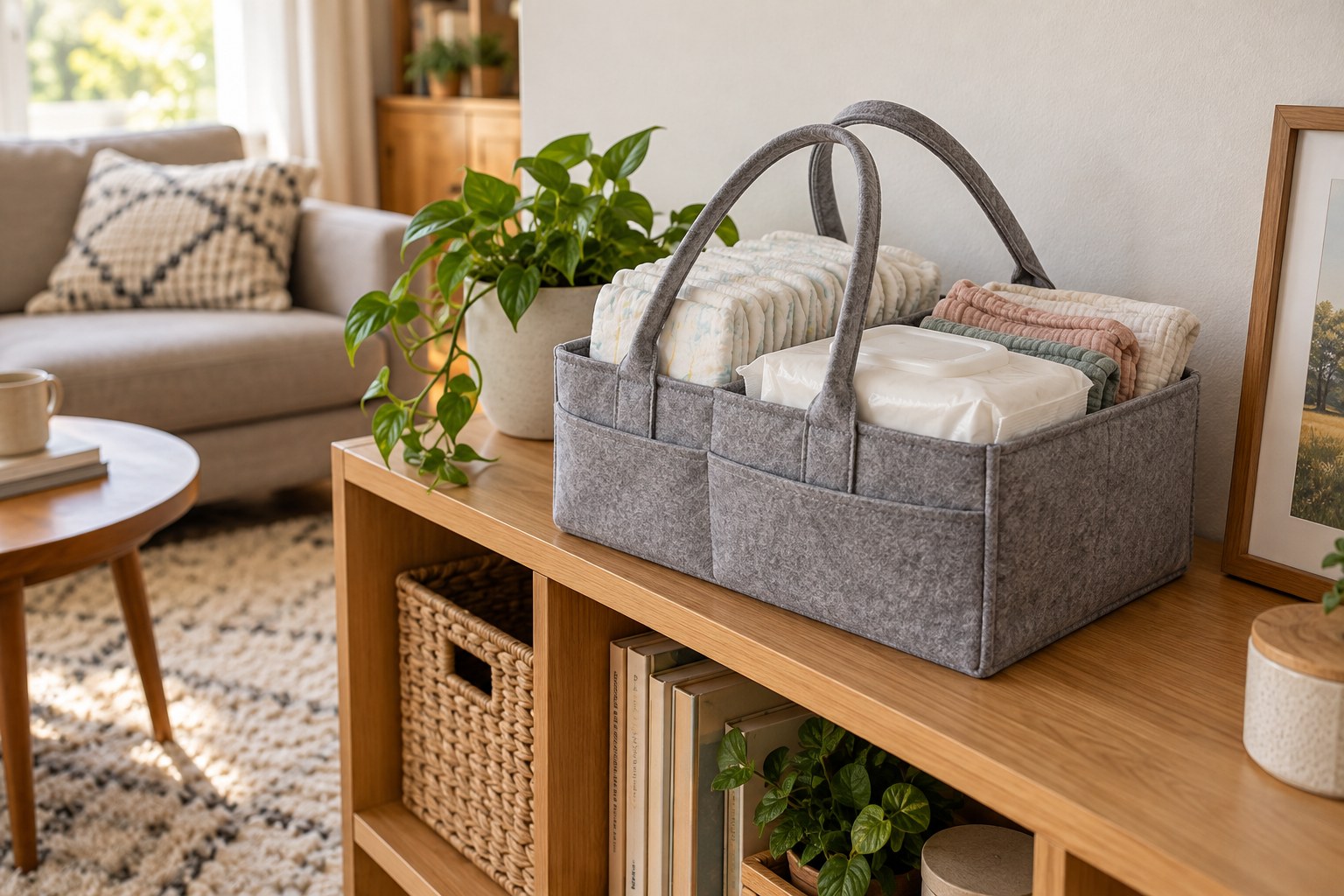
Baby supplies tend to spread wherever a task last happened. A packet of wipes appears beside the sofa, spare clothes stay in a tote, and a delivery box becomes a permanent storage unit. You can reduce the spread without trying to keep every item in one distant cupboard.
Identify the places where care actually happens. You might need a changing supply point and a place for feeding-related items, while bulk refills can live elsewhere. Give each spot a small working quantity rather than a full duplicate of everything. This makes it easier to notice when supplies are low and prevents several half-used packs from disappearing around the home.
Store by the next action
Put items together because they are used together, not because they match visually. A clean outfit beside changing supplies may be more useful than a drawer sorted into many tiny clothing categories. Keep care products and other items that children should not handle securely out of reach, even if an open basket would look tidier.
Choose containers that fit the available shelf and can be cleaned. You do not need to buy a matching system before discovering what volume you actually use. A shallow drawer or an existing washable container may work well. Avoid creating a crowded surface around the baby's sleeping area; storage should remain outside the clear sleep space.
Leave one landing place for items that need a decision, such as an outgrown outfit or a gift to exchange. Empty it regularly. Without a limit, this small holding area can become another unsorted cupboard.
Share the map of the house
Show another caregiver where supplies live and where refills are kept. A system is not truly simple if only one person can find the replacement wipes. Use plain labels where they help, especially for larger sizes or infrequently used items, rather than labeling every individual object.
Review the arrangement after a few weeks. The baby's needs and the family's routine will change, and a useful supply point may move. You do not have to preserve a nursery setup that no longer suits daily life. Keep the parts that save effort and let the rest of the home remain available for meals, work, visitors and ordinary family living.