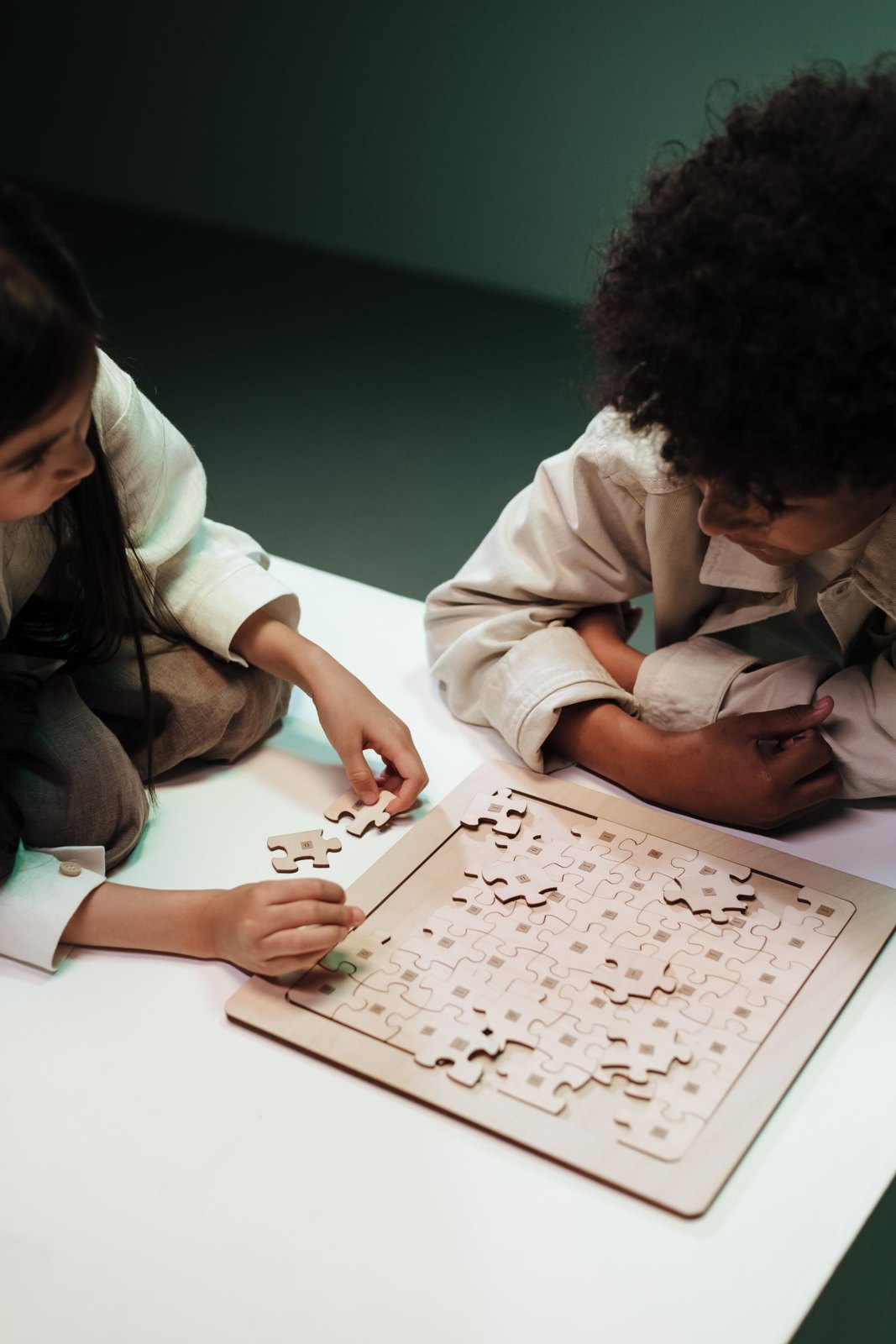
A family puzzle does not need to be finished in one sitting. In fact, it may work better as something people return to between other parts of the day. The important choices are the puzzle itself and where it can remain without making the rest of the household inconvenient.
Start with an image people want to look at. A familiar scene with distinct areas can give different players something to work on, while a large expanse of nearly identical color may be less inviting. Consider piece size and handling as well as the number printed on the box, and follow the product's age guidance.
Choose the footprint before opening the bag
Check the completed dimensions and allow extra space for loose pieces. A puzzle that fits the table exactly may leave nowhere to sort. If the table is needed for meals, use a suitable board or tray that an adult can move securely without balancing it across chairs.
Keep small pieces away from younger children and pets. A puzzle on a low surface may need to be put away between sessions rather than left accessible. Do not assume that calling it the older child's project keeps a toddler from investigating.
Share the work without assigning permanent jobs
Some people enjoy finding edges; others prefer a particular color or object. Let those preferences guide the start, but allow roles to change. A child who wants to try the difficult area should not be confined to sorting pieces for everyone else.
If someone is stuck, ask whether they want help before placing the piece yourself. Offering a small group of possibilities can preserve their decision. Adults can work nearby without quietly taking over the whole picture.
Make stopping ordinary
Leave when attention fades, and allow people to return independently where appropriate. There is no need to announce that the family has failed to finish. A shared project can be meaningful even when no two people spend the same amount of time on it.
Before clearing it away, ask whether anyone wants a photograph or another session. If the puzzle is no longer interesting, taking it apart is also a reasonable ending. Check for missing pieces and keep that information with the box, so the next attempt does not become a search for something that is already known to be absent.