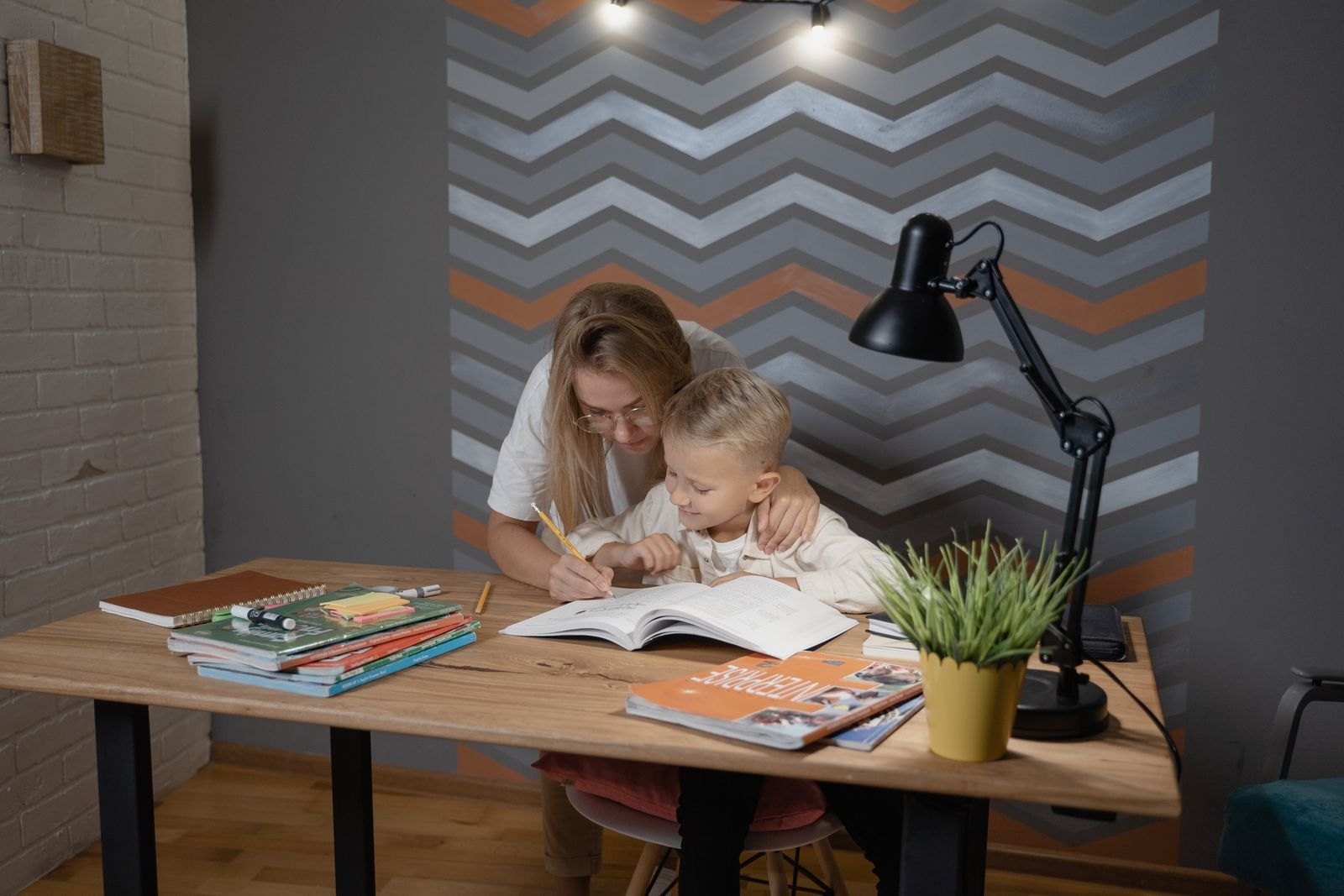
A child does not need a permanent desk for every piece of schoolwork. A dining table can work if materials are easy to bring out, the child has a suitable place to sit and the work can be put away without being lost. Define both the setup and the closing step.
Keep ordinary supplies in a manageable container: the items the child actually uses, not every piece of stationery in the home. Separate unfinished work from loose scrap paper. A folder or tray can protect a project when the table needs to return to family use.
Make the work period workable
Check lighting, seating and the space needed for the task. Reduce avoidable distractions where possible without expecting a shared home to become completely silent. If devices are required, distinguish school use from unrelated entertainment and make the relevant expectations clear.
Ask the child what the assignment requires before assuming that sitting longer will solve a difficulty. They may need a missing instruction, a material or help communicating with the teacher. Offer support that helps them begin and understand, rather than taking over the work to get the table cleared faster.
Agree on when the table is needed for meals and what happens if the work is not finished. A project tray or alternate place can prevent an abrupt conflict. Do not set a deadline that quietly assumes every assignment takes the same time.
Give closing the work a short routine
Put completed work in the appropriate folder or bag, keep unfinished materials together and return the basic supplies to their container. An adult may need to help younger children learn this sequence. The closing step should take minutes, not become a second cleanup task with many categories.
If a shared space repeatedly fails because of noise, timing or access needs, consider another arrangement and discuss relevant difficulties with the school. A portable setup is an option, not a requirement every child must adapt to without support.
Review the supplies occasionally and remove dry pens, unrelated papers and items that have accumulated. The system is successful when the child can start with what they need and the family can use the table afterward, without either function feeling like an intrusion.