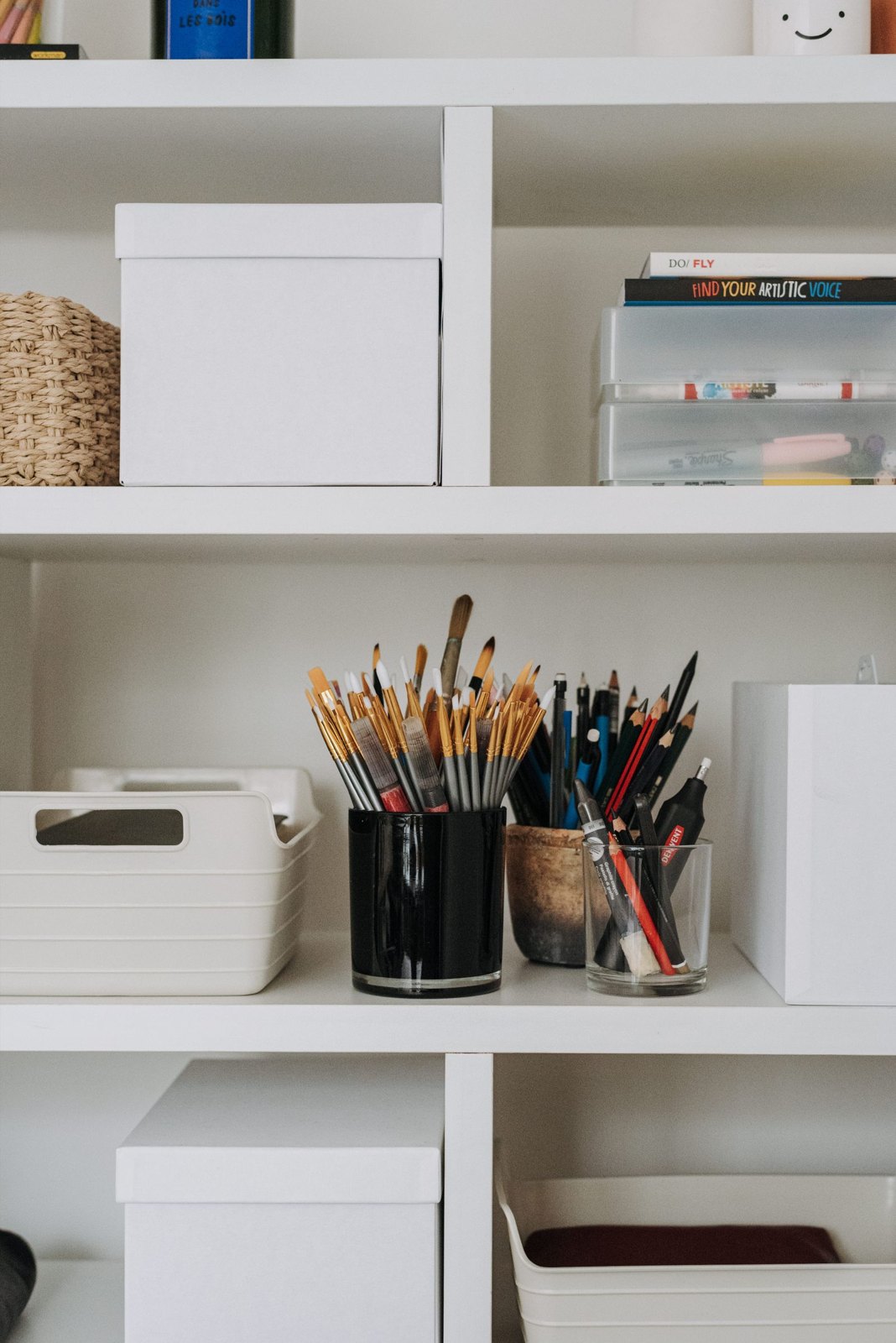
A craft cupboard can look organized and still be difficult to use. Sorting everything by color or placing it in matching jars may photograph well, but children usually approach the cupboard with a different question: what do I need to make this?
Begin by watching a familiar activity. If drawing requires paper from one room, crayons from another and an adult to locate a sharpener, those supplies need a clearer relationship. Organize around the tasks your household actually repeats rather than an imagined collection of future projects.
Make a few working groups
Drawing, paper construction and supervised painting might be enough categories. Keep a modest amount ready to use and store refills separately. Avoid filling the accessible area with duplicates that make it harder to see the choices.
Use containers the intended child can handle appropriately. A heavy box on a high shelf is not independent storage. Keep tools, chemicals and materials unsuitable for unsupervised access secured elsewhere, following labels and age guidance. Do not transfer products into unmarked food containers for a tidier appearance.
Keep materials identifiable
Original packaging may contain instructions, warnings or cleanup information you need later. Preserve that information when arranging supplies. A photograph of a label can be a backup, but it does not make an unsuitable container or unsafe access arrangement appropriate.
Separate clean, useful scraps from pieces too small or damaged to use safely. Limit the saved-paper container to a space you can review. Keeping every offcut can turn recycling into a larger storage problem than the new supplies.
Test the return journey
After a session, ask a child to put away one familiar category with the help they need. Notice where the system becomes confusing. Perhaps the lid is difficult, the shelf is too crowded or two boxes look identical. Change that detail instead of adding more labels everywhere.
An unfinished project needs a place of its own. Otherwise, it can block access to all the materials beneath it. A folder or suitable tray can distinguish work in progress from supplies ready for another person.
Review the cupboard when something stops working, not because every container must remain perfect. The useful measure is whether a child and adult can begin an activity and clear it away without a long search.