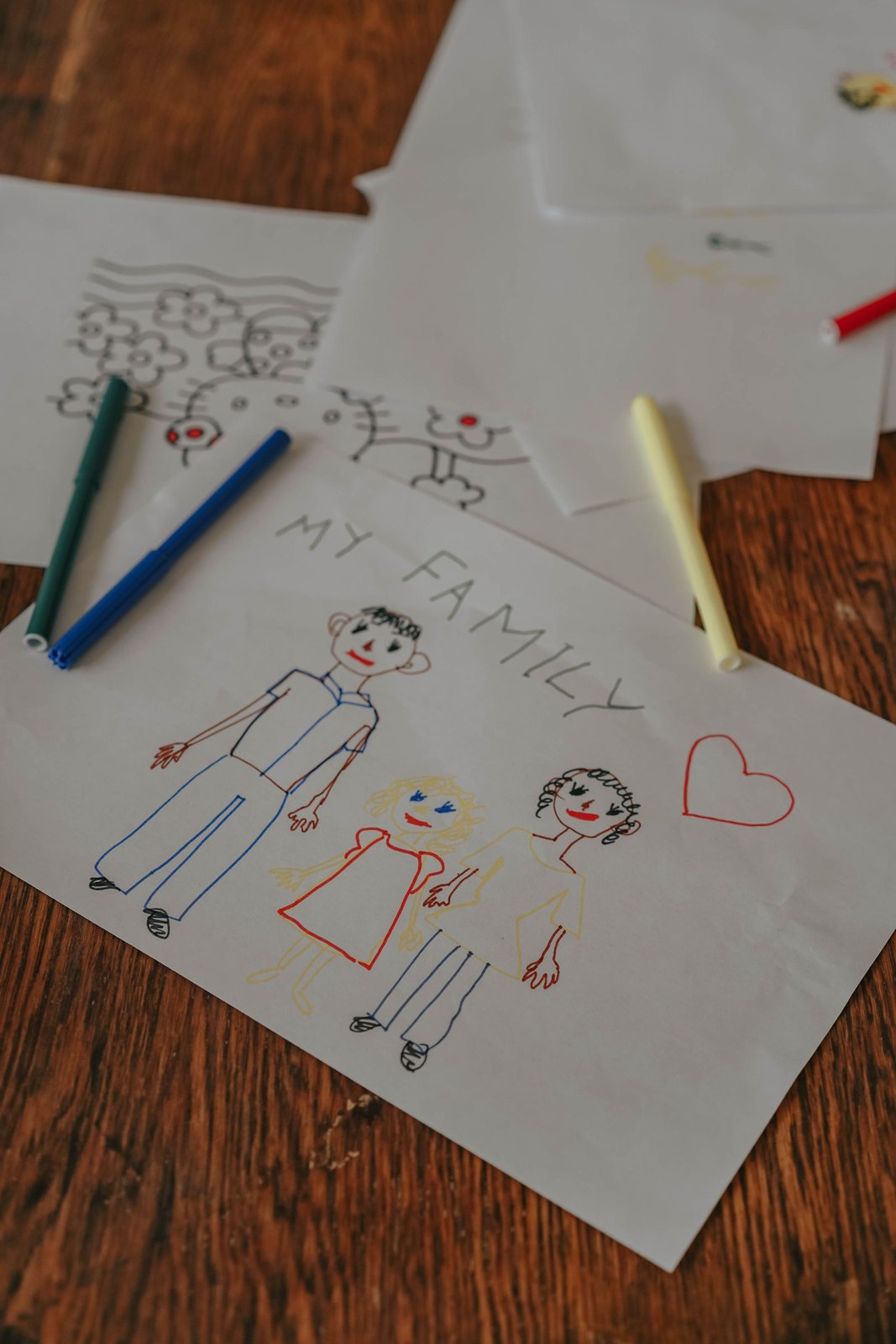
Children's artwork can arrive faster than a household can display or store it. Keeping everything may feel kind, but a large unexamined pile is difficult to enjoy. A smaller collection can preserve meaningful work while leaving room for new creations.
Separate current display from long-term keeping. A piece can spend time on the wall or in a temporary folder without becoming a permanent archive. Explain the process in a way suited to the child rather than quietly treating every drawing as disposable or promising that every sheet will be saved forever.
Let selection happen together
Ask which pieces the child wants to keep and why. They may remember a story or a difficult detail that is not obvious to an adult. Add a name, approximate date and a brief note where useful. Those details can make a small collection more meaningful years later.
Set a reasonable physical boundary, such as a folder or box, and review it when it fills. The boundary should guide choices, not become a reason to rush a child through an upsetting decision. Sentimental items can be discussed separately from ordinary daily paper.
Photograph selectively
A photograph can record a large or three-dimensional creation before it is dismantled, where appropriate. Check that the image is clear and save it somewhere you can find. Digital storage can become just as crowded as physical storage, so use a simple naming or album habit rather than taking endless pictures with no plan.
Do not post a child's work or identifying information publicly without considering privacy and the child's wishes as appropriate. A private family record does not need to become online content.
For physical keepsakes, choose suitable dry storage and avoid packing damp materials away. Bulky projects may need a different decision from flat paper. Some are meant to be played with or taken apart, and preserving them unchanged may not be the child's priority.
Review a small batch at a time. A few chosen pieces with a remembered story are easier to revisit than years of paper stored only because no decision was made. The collection can honor the work without requiring the household to become a permanent archive of every afternoon.