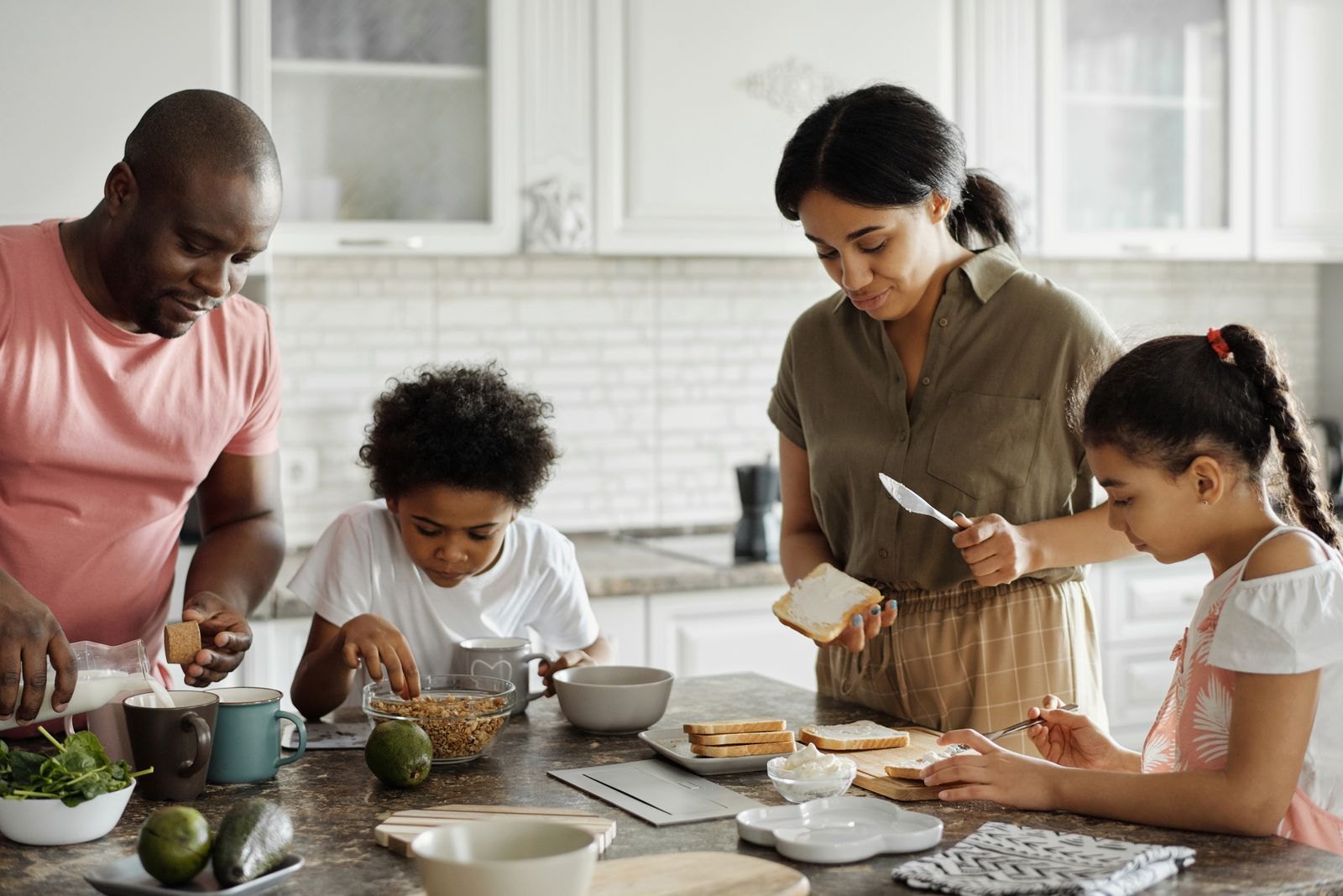
A kitchen can become crowded even when it is large enough. One person is cooking, another is making lunch and a child needs a drink from the same corner. Look at where routines overlap before buying more storage or deciding that everyone else is in the way.
Identify the busy periods and the tasks happening together. Breakfast and school preparation may need a different arrangement from dinner. Put frequently used safe items near the place they are used, while keeping hazardous products, sharp tools and hot cooking areas appropriately controlled.
Separate the routes
If possible, keep ordinary drinks and lunch supplies away from the main cooking path. A child collecting a suitable cup should not need to reach across a hot stove. Adults can prepare a safe access point according to the child's ability and the room's layout.
Give bags and paperwork somewhere outside the food-preparation surface. These items often occupy the exact space needed to finish a meal. A small nearby landing place may be more useful than trying to keep a large counter perfectly clear all day.
Agree on a short handoff
When two adults cook or prepare food at different times, communicate what is still in use. A pan cooling safely, food intended for tomorrow and a container waiting to be washed should not all be left for the next person to interpret. Store perishables appropriately rather than leaving them out for someone who may arrive later than expected.
Share cleanup in a way that leaves the space usable. Putting dishes in the sink may be reasonable during a task, but the sink cannot become the permanent end of every task if someone else needs it. Decide who finishes the final reset and what that includes.
Try a small change before reorganizing every cupboard. Move one commonly used item, clear one work surface or shift one preparation time. Watch whether the overlap becomes easier over several ordinary days.
Keep changes understandable to everyone using the room. If only one person knows the new location of everything, the kitchen may look organized while creating more questions. A useful shared layout supports the household's real movements, including the moments when several people need it at once.