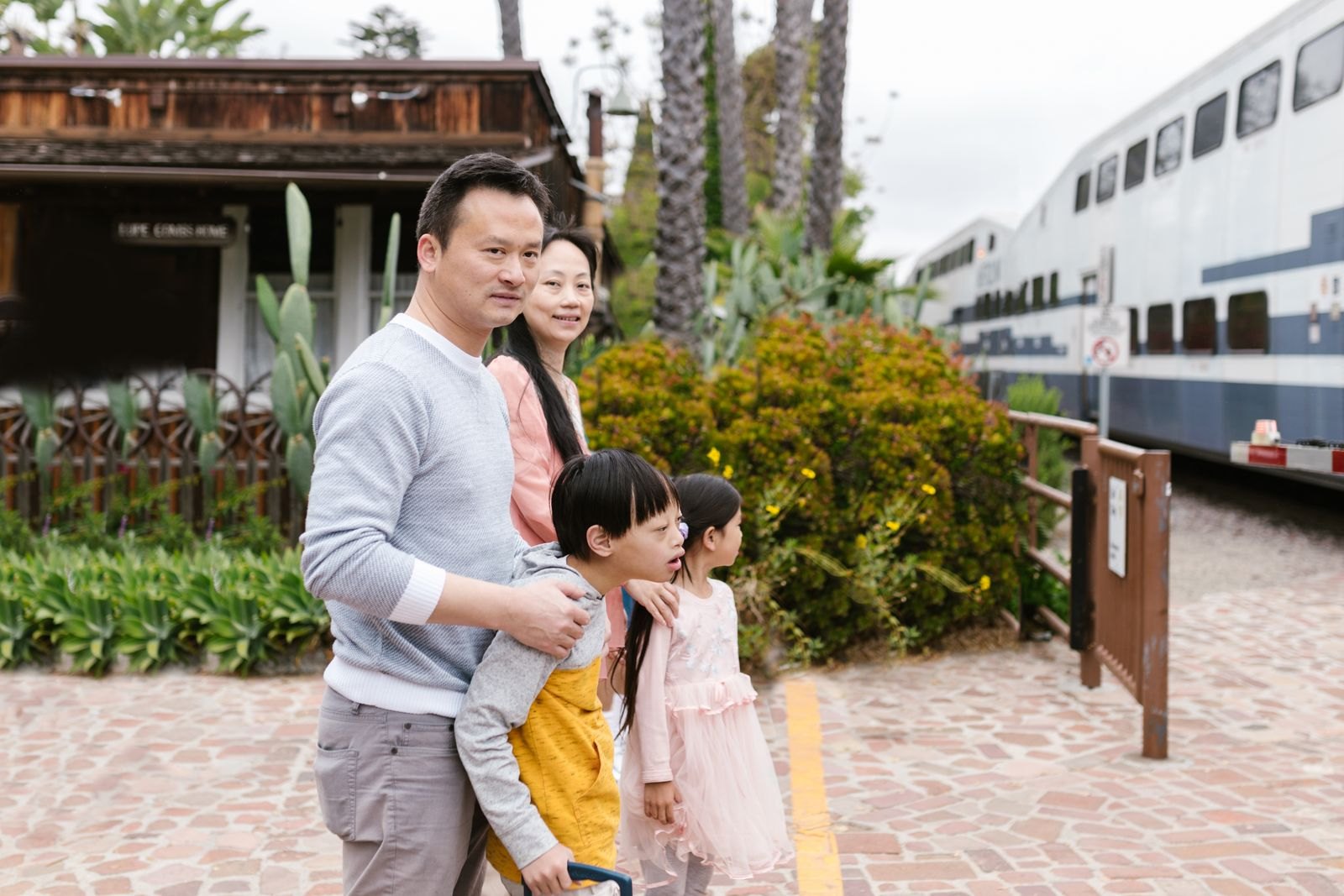
Train travel with children is often easiest while everyone is seated. The demanding moments are getting to the platform, boarding, finding space for bags and leaving with the same belongings. Pack and plan around those transitions rather than only the time spent on the train.
Check the operator's current rules for luggage, seating, strollers and any assistance you need. These arrangements differ between services. A ticket for the route does not necessarily include a reserved seat or a particular storage space.
Give each bag a job
Separate the larger luggage from a small bag containing what you may need during the ride. Keep tickets, essential care items, appropriate snacks and one or two activities accessible. Avoid distributing urgent items across several bags that will be stored in different places.
Choose a setup the accompanying adults can actually move while supervising the children. A child carrying a small personal bag can help, but do not depend on them managing a heavy or awkward item when the platform becomes busy.
Make the boarding plan explicit
Agree which adult handles which bags and who stays with each child, if more than one adult is traveling. Keep children away from the platform edge and follow staff instructions. Do not rush a risky boarding attempt because a seat or storage area appears to be filling.
For a connection, include the time needed to leave the first train and reach the next platform. Check accessibility and station facilities where relevant. A short connection that looks efficient for an unencumbered adult may not suit this journey.
Work through a connection on paper
For a hypothetical journey with a change of trains, list the tasks between arrival and departure: gather belongings, leave the carriage, identify the next platform, move there and board again. The connection needs room for those tasks as well as a possible delay. A timetable that permits the transfer is not a promise that it will feel comfortable with your bags and children.
Check whether the tickets are part of one protected journey or separate purchases, and read the operator’s actual conditions for missed connections. If the consequence of a delay would be difficult, a later onward train or a direct service may be worth considering. Do not assume that all rail bookings handle disruption in the same way.
Plan what the adults will do if the connection is no longer realistic. Finding staff and changing the onward plan is safer than rushing children through an unfamiliar station. Keeping the essential bag accessible makes that unplanned wait easier to manage.
Keep the ride flexible
Bring familiar activities that can pause, and use them one at a time. A book, drawing or a spoken game may be enough for part of the trip. Keep noise and belongings considerate of other passengers, and follow the operator's rules about moving through the train.
Before your stop, gather loose items while there is still time. Check pockets, seats and the floor without leaving children unsupervised. Confirm who is carrying each bag so nobody assumes another person has the most important one.
A successful train journey does not require constant entertainment. It needs manageable luggage, clear supervision and enough margin that ordinary delays do not force everyone to hurry at the most difficult moments.