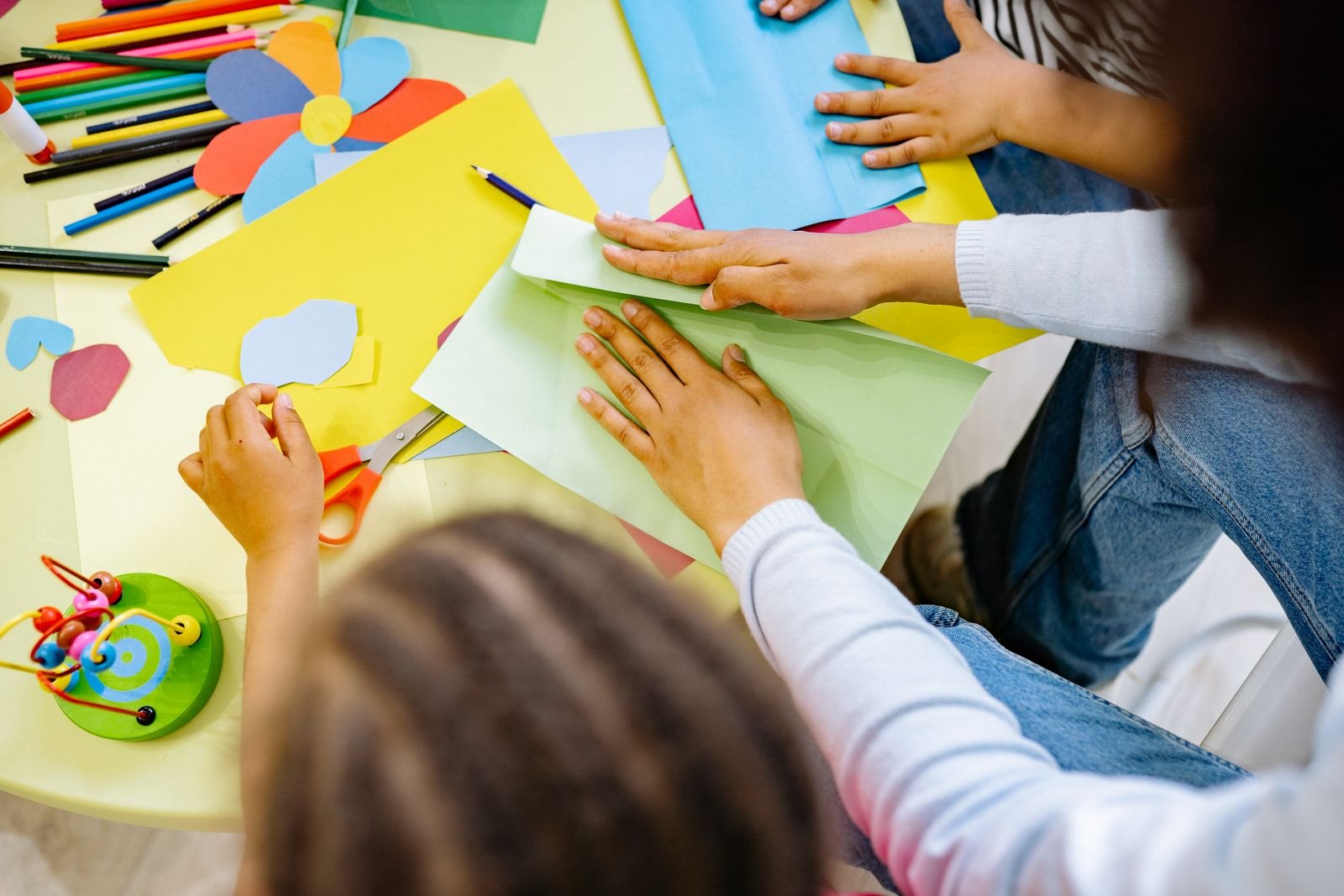
Paper collage is forgiving because the picture can change before anything is attached. A child can move a large shape, cover a mark or decide that the original idea is no longer interesting. You do not need a sample for everyone to reproduce.
Set out a base sheet and a small assortment of clean paper. Different colors, plain packaging paper and pages from an unwanted catalog can provide variety. Remove private information, staples and unsuitable material before children use recycled paper. Keep small scraps away from younger children who may put them in their mouths.
Offer shapes without deciding the picture
Children who can use appropriate scissors with supervision may cut their own pieces; others can tear paper or choose from larger shapes an adult prepares. Tearing is a complete way to work, not a substitute that must eventually be replaced by neat cutting.
Use an age-appropriate adhesive according to its instructions and protect the work surface. Put out a manageable amount. More supplies can be introduced later if the child needs them, but a crowded table often makes it harder to see the arrangement taking shape.
Try asking where one piece might go rather than asking what the whole collage is supposed to be. It may become a recognizable scene, a pattern or something the child describes differently each time. You can be interested without requiring an explanation.
Let arranging take time
Some children will glue immediately; others may spend most of the session moving pieces around. Both can belong to the activity. If you want to preserve an arrangement before it changes, ask whether a photograph would be welcome rather than attaching pieces on the child's behalf.
For a shared collage, agree on whether everyone has a section or whether the whole surface is communal. Separate base sheets may be easier when children have very different ideas. Sharing materials does not require sharing every decision about the final picture.
End with a place to dry
Choose that place before wet work begins. Keep it clear of food preparation and somewhere the collage will not be disturbed by younger children or pets. Gather usable scraps separately from waste so the next session does not begin with a box of tangled leftovers.
A collage can stay small. One sheet with a few carefully chosen pieces is as valid as a large picture covered edge to edge.